Stuart Farm

  • Our Story
  • Shop
    • Our Store
    • Where to Buy
  • Come Enjoy a Farm Stay!
  • Our Classes
  • Fertrell Products
  • Contact Us
  • Blog Posts
    • Our Animals
    • Mother Nature
    • Our Garden
    • Recipes
    • Farm Life
    • Projects
  • Consultation Services
  • 0 items

A broody hen

Posted on June 6, 2013 Written by Serena 6 Comments

20130604-204027.jpg
Day one…

As I sat watching Neckless fuss over her eggs, it was easy to let everything else leave my mind and focus on the beauty of what I was witness to. Most breeds have had the broodiness bred out of them. None of our Leghorns or Rhode Island Reds have shown the least bit of broodiness, but here was a Freedom Ranger, digging down deep into her DNA to do what she was meant to do.
20130604-202710.jpg
And we wait…

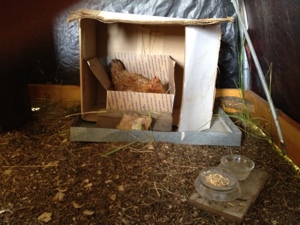
A broody hen is something I have wanted for some time now. But for some reason, when I saw she was broody, all I could think of was how to break the habit. Then Fred reminded me that I WANTED a broody hen. So off I went to create the perfect broody box for her. After a bit of reading and asking around, I decided to get her out of the nest box and into a space she could be undisturbed. I found a cardboard box that would hold the nest and another I would put the first in for some extra privacy. I set Neckless up in a corner of our brooder house with her own hospital tray of feed and water. She is expecting after all!

And there she sat. Every other day, I would make sure she got off the nest, stretched her legs, and ate and drank. On hot days, I would leave her to have some extra time off the nest, but would check in to make sure she did get back on. What I had read most was to make sure they eat and drink, as they will stay on the nest neglecting their needs. Since they won’t get off, even to poop, I would check to make sure she pooped when off the nest. And after holding in a day of feed, she would expel some huge rank poops that were immediately toss out the brooder for fear of succumbing to the smell.

Neckless was a good broody. Left alone, she would get back on the nest. I loved watching her arrange the eggs under her. I loved watching her walk around and start to come out of her trance, shaking her head, ruffling and preening her feathers. After 20 days of her sitting and me fussing, it was time.

While I did chores for the other 100 chicks in the brooder house, I heard Neckless clucking and cooing. It was different than her regular “stop making noise and annoying me” cluck she usually gave me. So I HAD to find out if anyone had hatched. I tried to lure her out with food, but she wouldn’t come. So I carefully lifted her up and saw a little chick that must have just hatched since it was trying to stand. I didn’t want to upset anything, so I placed her gently back down and she started her cooing again.
20130604-205526.jpg
Finally!!!

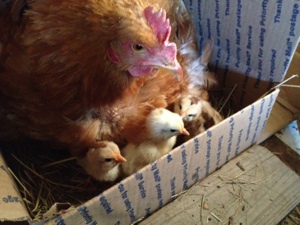
As of right now, I have seen over 500 day old chicks. But this…this was breathtaking and amazing. I couldn’t help but run out to find Fred and tell him the news. And truth be told, I was a bit teary eyed. Neckless sat for 20 days warming and turning these eggs, clucking to them, and knowing just when to stop fussing over them and let them hatch. With one hatched, she knew just how long to keep sitting for the others to hatch. And when they went past their time, she stopped sitting. Out of 7 eggs, 1 broke early on, 4 hatched, and 2 duds. The day after the first hatch, 3 others joined the family. The first chick hung out under Neckless’ wing while the others hatched down below. Then everyone snuggled down under momma for the day. On day 3, they were ready to get out and explore!
20130604-203343.jpg
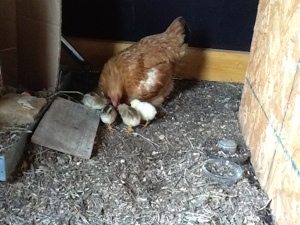
Momma calls for dinner and everyone is hungry.

I cut the nest box open so the chicks could get in and out easily and added a ramp. With momma watching over, the little ones started to explore. Soon, Neckless was making all kinds of sounds I had never heard. There was the call to come back to her. The call that there was food. The call to pay attention. Neckless would scratch and peck and drink, and the chicks would do the same. I ground up some wheat and sprinkled it about for them to find. When I first did this, I could have sworn Neckless gave me a look like “Why are you spoiling them?! They have to work for their food!”
20130604-203627.jpg
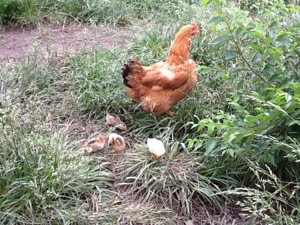
First day out on the pasture.

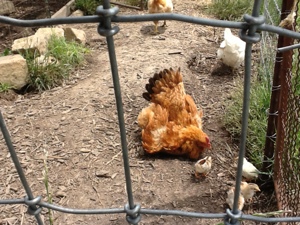
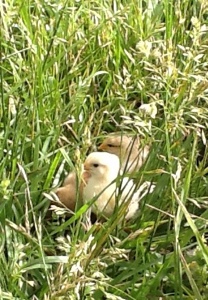
It is interesting to watch Neckless teach the chicks all they are supposed to know and do. Like taking a dust bath, which plants to eat, and how to scratch around. And it is interesting to see the chicks different personalities. The all white one is the leader and most adventurous, and the lighter brown one is always getting left behind.
20130604-203722.jpg
Lesson number 3…how to bathe.

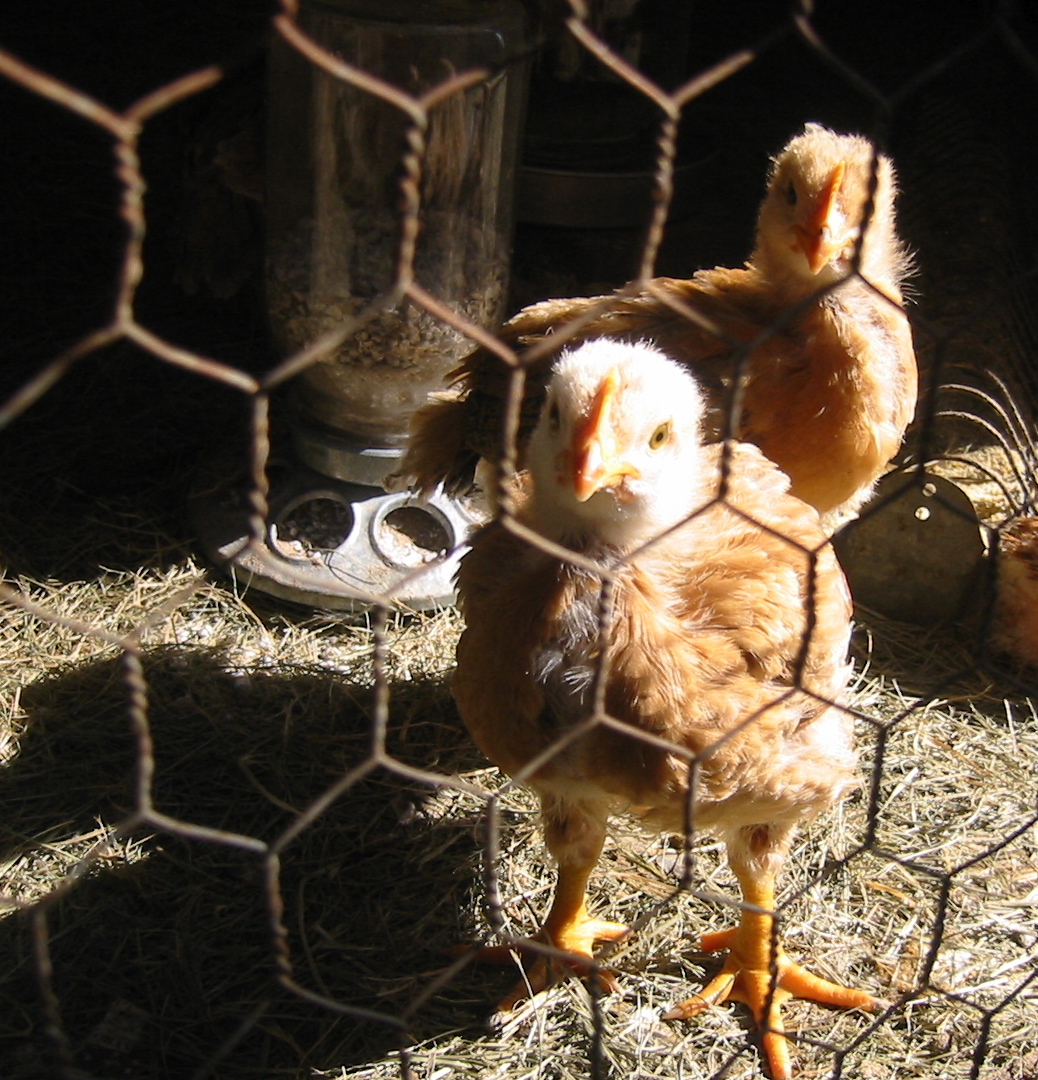
Only one of the White Leghorn eggs hatched. The others were from Rhode Island Reds or Freedom Rangers. It will be interesting to see how they mix with Ron Rico, the Silver Dorking. All chicks have the Dorkings extra toe, but I will have to wait to see who gets the Dorkings short leggedness.
20130604-203953.jpg
Looking for momma.

I doubt any of the other girls will go broody. I do hope that Neckless does again. If she does, I am going to put a lot more eggs under her. I don’t think I could ever tire of watching something so incredible.
 

Filed Under: Our Animals Tagged With: chickens

Our Freedom Ranger Chicks

Posted on May 7, 2013 Written by Serena 2 Comments

We started raising Freedom Rangers in 2011. We both have experience with Cornish Cross chickens, what you buy in the grocery store, and while the meat was good, the way the chickens behave was not what we wanted. The Cornish Crosses are bred to grow fast and big. In 6-7 weeks you can butcher and have a 4-5 lb dressed bird. They don’t range very well and tend to sit at the food tray and eat. Sitting as much as they do, they tend to have missing feathers on their breasts. They also tend to have legs problems because of the rapid growth rate. They just don’t look like something we would want to eat, so we searched until we found a better meat bird for us.

The Freedom Rangers take an extra 2-3 weeks to get to weight and like to range. They do well in the tractor and electric netting set up we have.  We get rave reviews from our customers on the taste of the Freedom Rangers, so we stick with them.

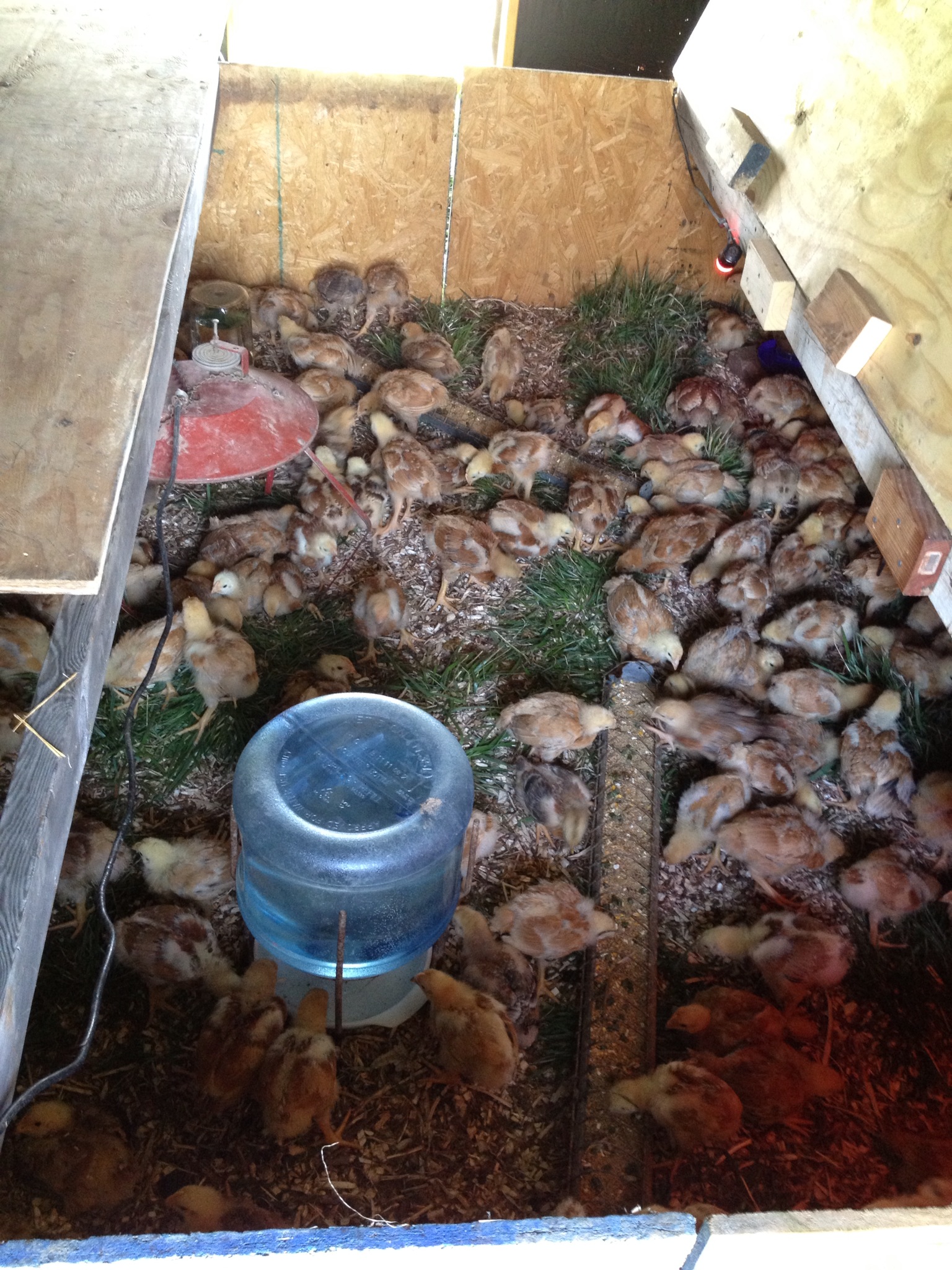
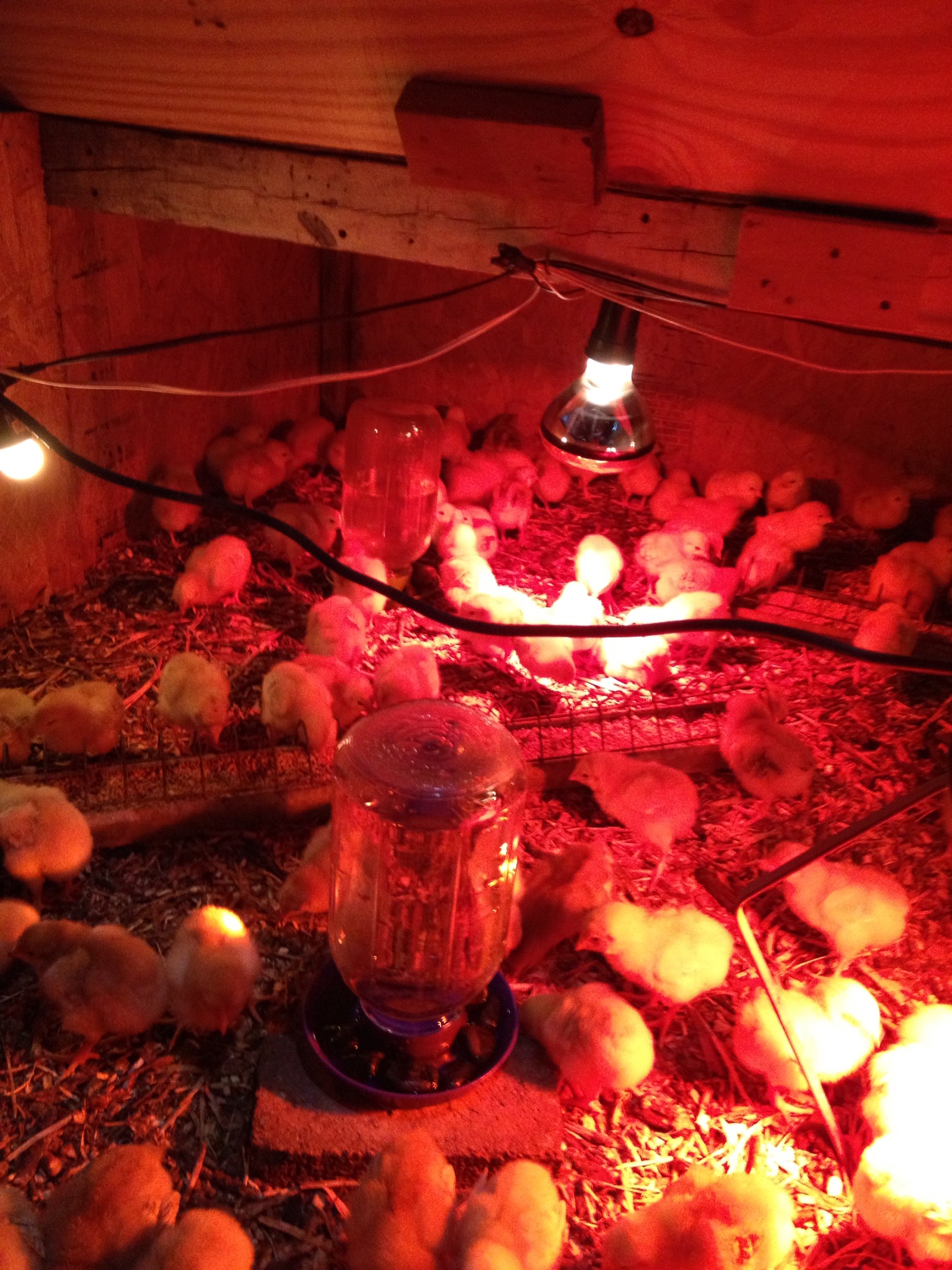
First day in the brooder.

We get our day old chicks and into the brooder they go. We raised a few batches on dried grass clipping bedding and then switched to the deep litter method. We pile about 6 inches of mulch and wood chips into the brooder and instead of changing out the bedding, we simply rake to turn over the soiled areas, adding more mulch/chips as needed. Using this method gives the young chicks a good foothold, making sure their legs grow properly, and encourages scratching and foraging. The added benefits of this method are it begins to compost and creates heat and it encourages insects and worms to live in the bedding, giving the chicks something extra to eat. And it always provides interesting sticks, leaves, and goodies for the chicks to play “keep away” with.

Throughout their life, their water has homemade vinegar in it to help with coccidiosis, since we do not medicate any of our birds.  They are fed a special feed blend with mineral supplements twice a day, and once they are older, constant access to pasture.  Our feed ration is a blend of wheat, corn, soybean meal, fish meal, aragonite (calcium), and Fertrell’s NutriBalancer minerals.  We ferment the grains for  28 hours and top dress with the powdered feeds.  We start the chicks out on fermented feed and have noticed the brooder does not smell nearly as bad as before, and the poops are solid with no grains present.

In the outside brooder.


Out on the pasture.

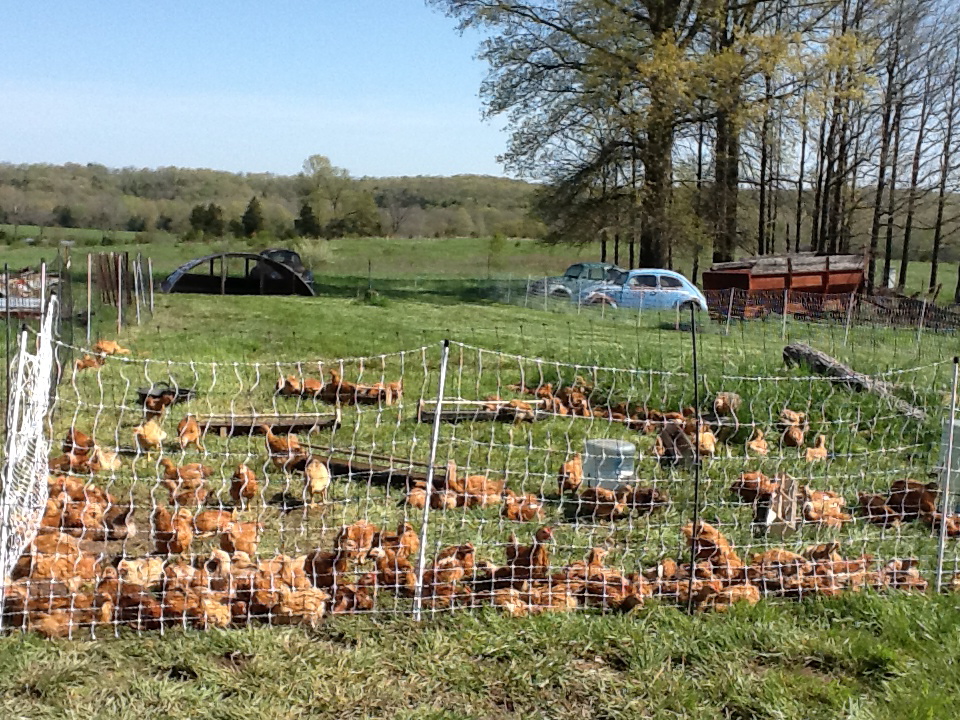
Once the chicks are just about feathered out and they can maintain their own temperature without the aid of a heat lamp, they are moved outside into the moveable tractor.

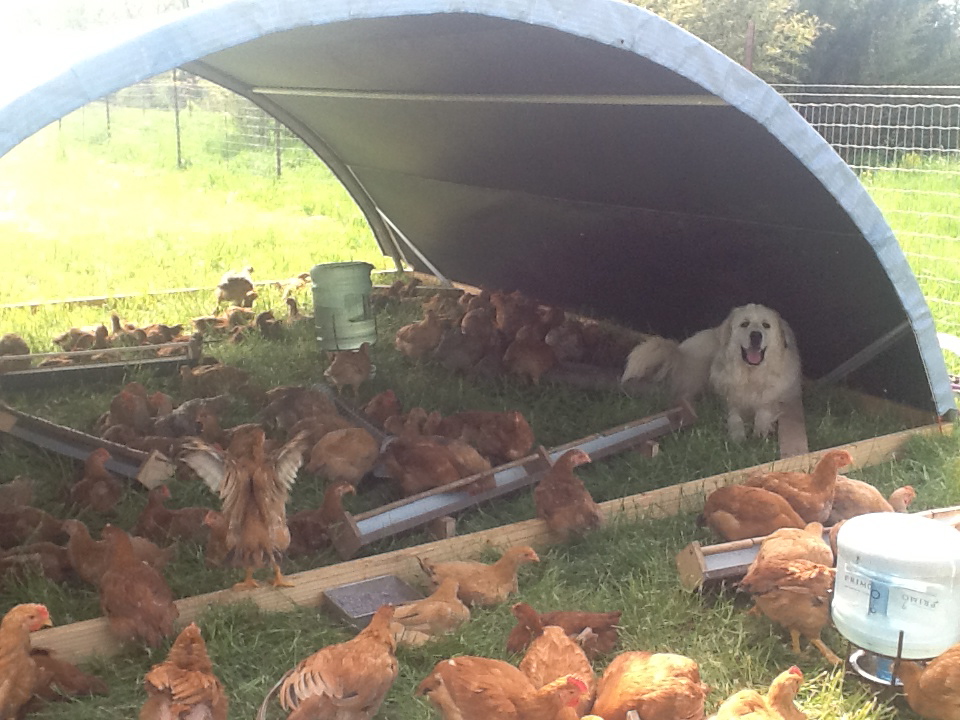
7 weeks old and Maxie gets to have some unsupervised protection time with them.

The tractor gets moved around our pastures inside an electric netting fence. The tractor is moved during morning and evening chores to make sure they have a clean space to eat during the day and roost at night.  At about 4-5 weeks, you can start to tell the roosters from the hens. The roosters will start to have staring contests which lead to fights and the hens are noticeably smaller.  At this point, we separate the roosters from the hens to keep the hens from being mounted and scratched up.

Each batch we have raised has been different. One batch will stay out and forage most of the day, others will hang in and around the tractor more. Some can’t wait to see you and come running to hang out, others couldn’t care less if you are there, much less if I am singing to them.  Some are messy eaters and need the feeders cleaned out 4 times a day.  It’s interesting to see all the different personalities in a group.  The rooster that is always picking fights, the runt who won’t back down, the groups of hens that sit in the corners or along the fence.

For anyone wanting to raise their own meat birds, we would highly recommend Freedom Rangers.

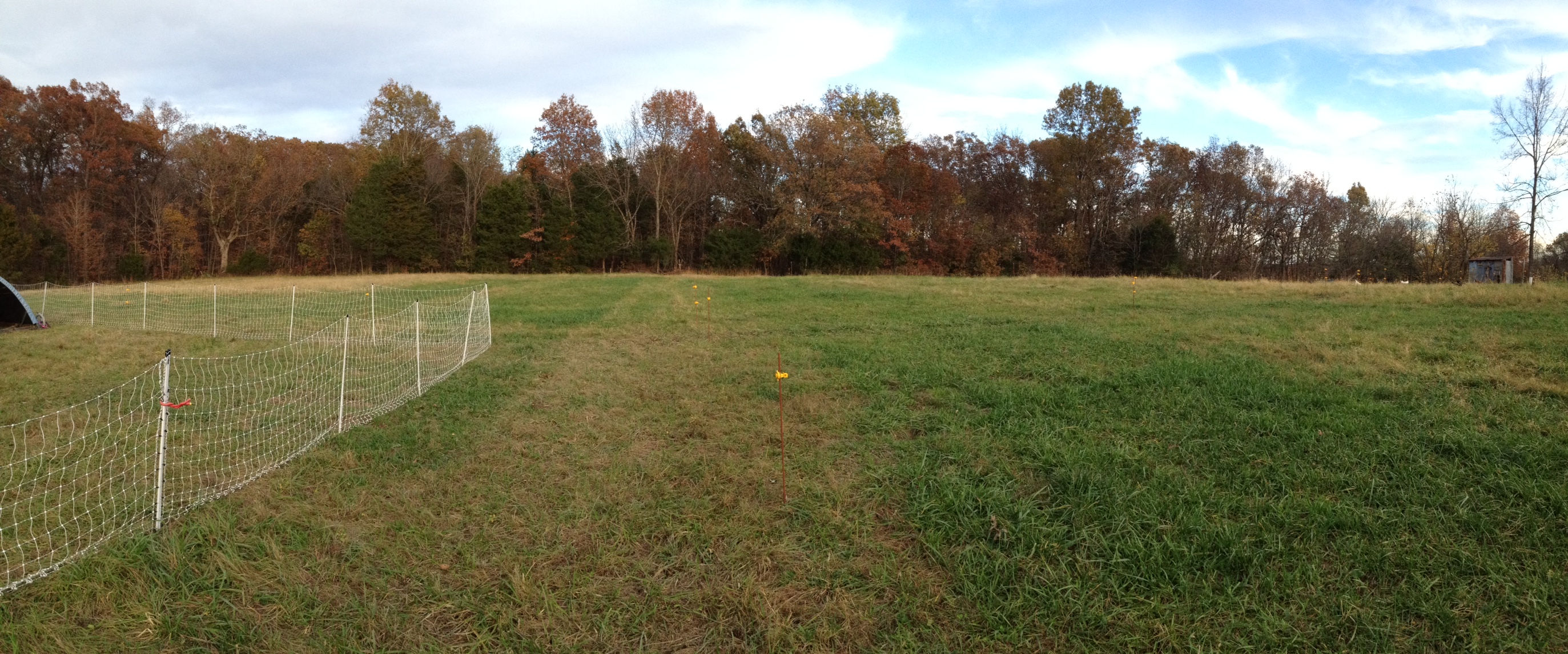
Green strips of fertilized pasture.

Filed Under: Our Animals Tagged With: Freedom Rangers

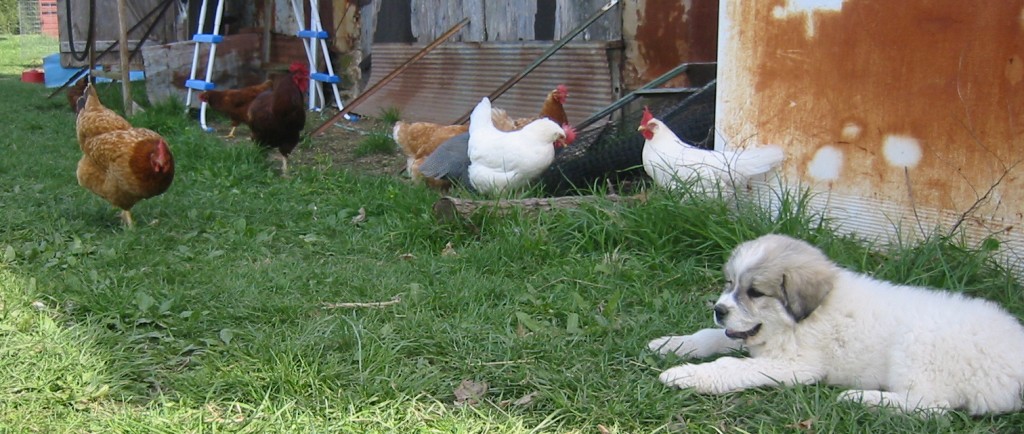
Maxie, Our Great Pyrenees

Posted on March 31, 2013 Written by Serena 2 Comments

In 2012, we had a massive chicken loss to predators.  We had toyed with the idea of getting a Great Pyr to protect our chickens, and this sealed the deal.  A family member had an accidental litter of Pyrs, but it wasn’t quite the right timing. Raising 3 batches of chickens and a puppy would be a lot of work, but we just couldn’t pass up the opportunity.
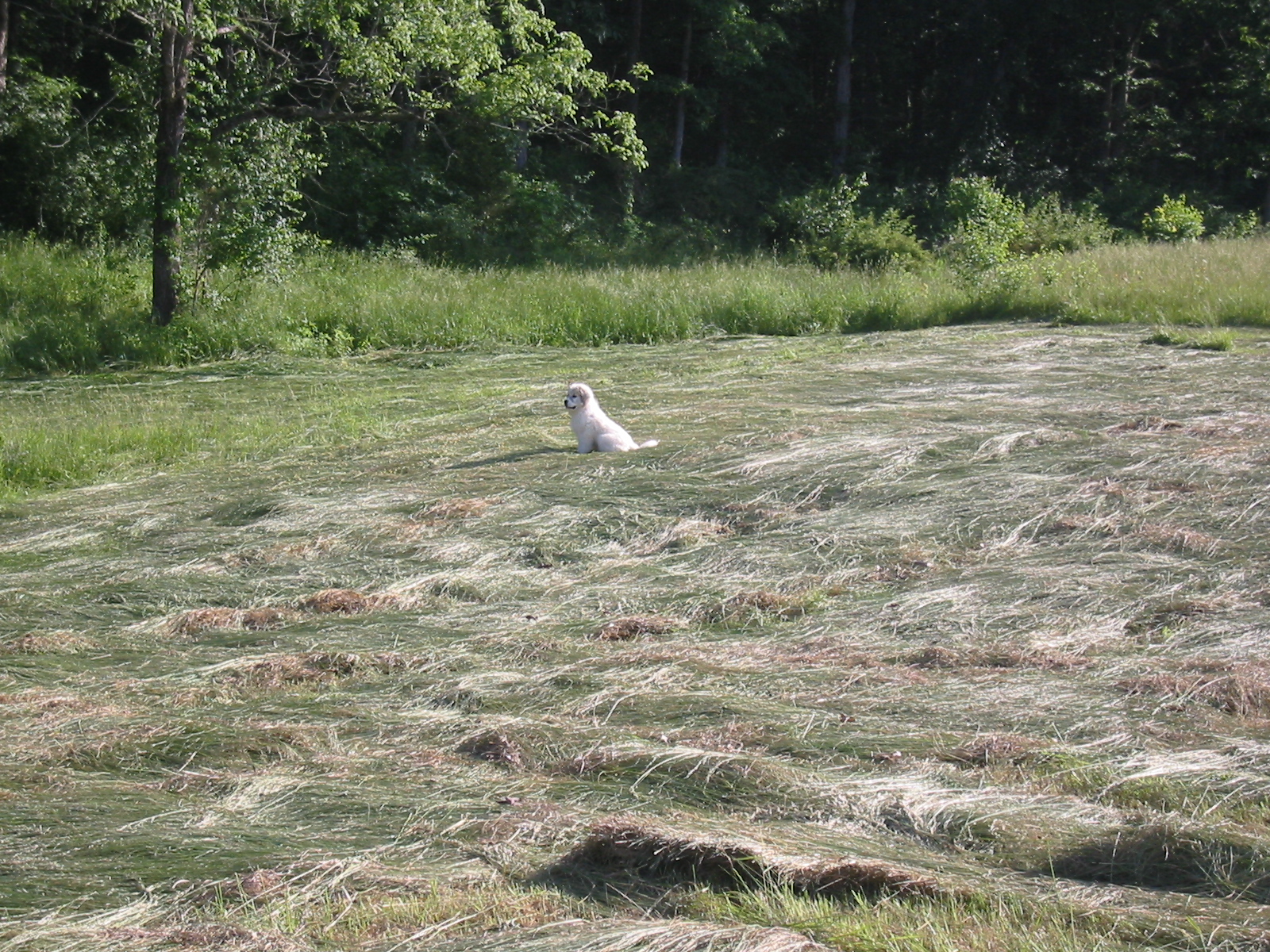
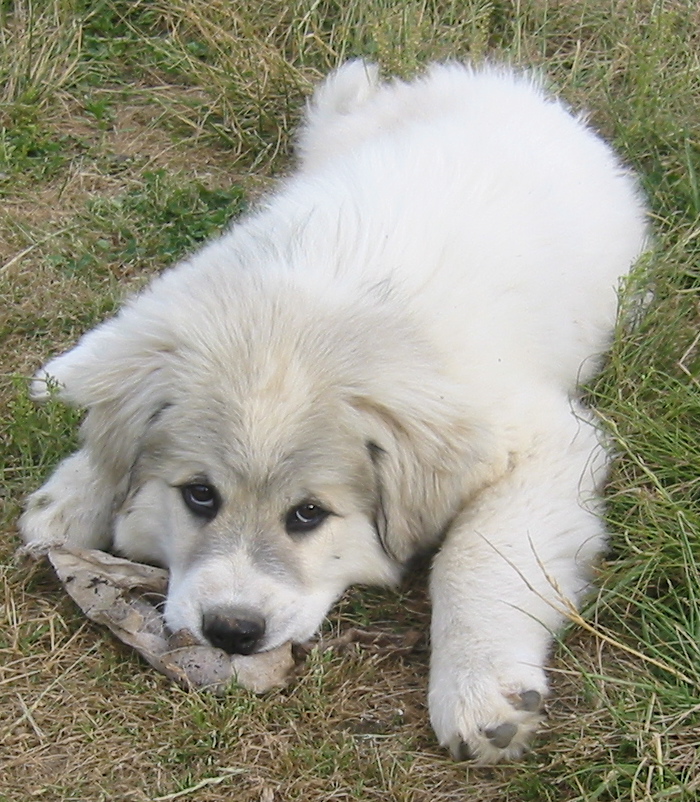
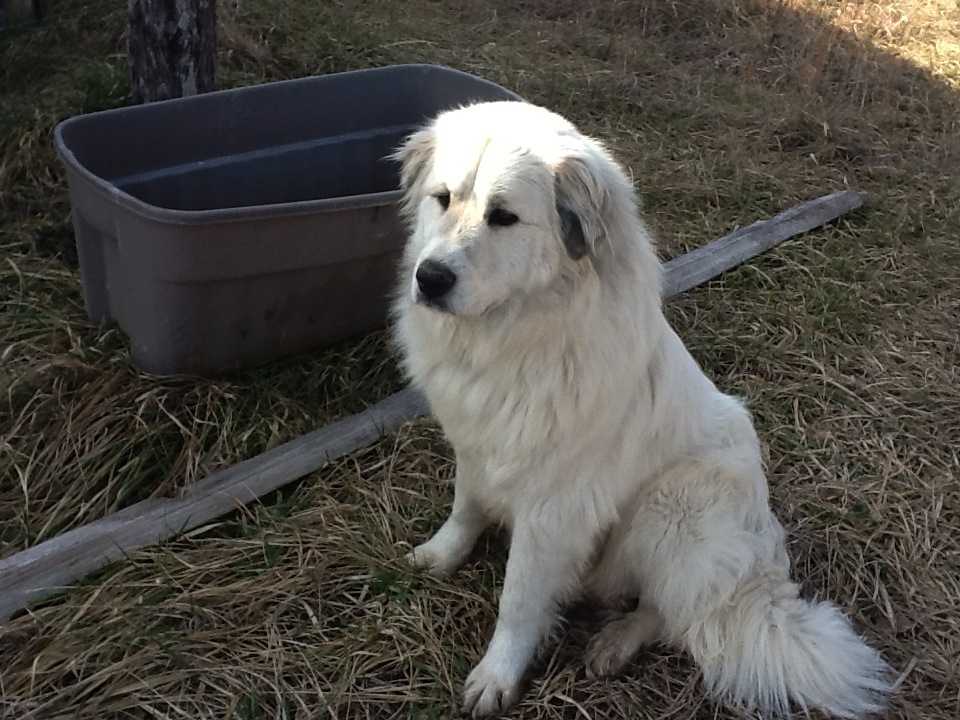
We got Maxie at about 2 months old. We started her off in the chicken’s yard, but blocked off the access to the coop. This gave her a chance to be around the girls, but not so close that she could “play” with them. During the day, Maxie would stay with us around the farm and around the chickens supervised.  Her first encounter with the chicks in the tractor was being pecked on the nose when she got too close.  After that, she would still get close, but not that close.  Once the chicks were in the electric netting, Maxie would stay the night in there with them.

The thing with Pyrs is they are not normal dogs. Fetch, come, roll over…that’s not their thing. I read a lot about training them and how they operate. Natural guard dogs, instinct rules their behavior. They keep their puppiness for almost 2 years, so training is long term. While they’re guard dogs, they’re submissive to whatever they protect. They were originally used for sheep, goats, and cattle, but have been used more for poultry recently. It’s harder to train them for poultry since the birds don’t have the same stature and power as goats or sheep. When a Buck or Doe puts a dog in place, it’s very clear and respected. When a chicken doesn’t like what a dog does, it runs, which entices a chase.

With Maxie, I put her on a schedule and routine right away. At 2 months, that may seem a bit strict, but I believe that it’s easier to train a dog in what’s expected to start than to try to do it later or correct bad behavior. Maxie learned quickly that if she wanted to eat, it was on my terms. I would set her bowl down and if she did not eat right away, I took it away and tried again later. Once she started eating on schedule, I started to make her sit and wait to eat with “stay”and slowly walking away from her. Once she got that, I added “kiss” to it. I know, not really a useful command, but she is so sweet when she does it. “Kiss” is me getting about 6 inches from her face, saying the command, and her lifting her nose to touch mine. Feeding time goes like this: bowl on the ground, sit, kiss, stay, I walk away, sometimes to the other side of the chicken coop, and eat. Everything is accompanied by a hand signal (except kiss) and sometimes, it’s all done with signals.Monitoring the tree line.

Pyrs do not like to come when called. I work with her on this, but even now, she struggles with coming. I would take her on walks around where I wanted her to protect before her feedings.  That was her work before she ate. Some days she loved it, others, it was like pulling teeth. That led to leash training. She did NOT like the leash. I would put it on her and she would THROW herself on the ground and holler and wail like I was strangling her. After a while, she learned that it was better to get it over with than fight it. Then her wandering instinct kicked in. She would bolt down the driveway and head to see the neighbors dogs. I would go and get her, scolding her. I didn’t want her going there because it was on the main road and I didn’t want her to start hanging out there instead of where she was supposed to be protecting. We thought about putting down an electric drive over fence on the drive, but eventually, she stopped going down there. She even started to be able to come to the front barn and do chores with us without straying too far.

I adhere to a very strict I am the alpha dog policy with Maxie.  I take her food from her whenever I wish.  If she finds some nice bone or carcass out in the pasture, I make her drop it, take it from her, and give it back after I pretend to eat some of it.  When she would start to get crazy with the chickens, I would tell her no, pin her down, and growl in her face until she stopped struggling to get away. Even now, a growl will get her attention.  She’s also on a species-specific diet with no treats.  No, not even as a reward.  She eats raw chicken, pork, beef, eggs, salmon, and sardines. We used to give her some kibble because sometimes I forget to defrost the meat, or I just need a quick meal for her. Now that our production is up, we have enough raw food for her and the other dogs. No treats mainly because I want her to do what she does for my approval, not food.  Also, I don’t like dogs that beg for food.  I can sit next to her, eat a sandwich, and she pays no mind.

She had her first protecting incident when 2 dogs came on the farm. Some of the girls were foraging in a pasture a bit farther from the barn than I like, when the dogs were spotted. I went running to them and so did she with a bark and growl I hadn’t heard before. She chased them off and the girls were ok.  Since then, she’s been chasing off deer, rabbits, and even hawks. She keeps the neighbor’s dogs on their property, too.

Maxie is the first dog I’ve had since my Akitas when I was in my early 20s. After losing my male, Kuma, I didn’t think I would ever bond with another dog.  He was such a great dog, I always thought no other would compare.  But Maxie won my heart.  I wanted a work dog, not a companion, but Maxie had other plans.  She can go from being a love hog to running across the pasture in full protection mode in nothing flat.  Some days she has tried my patience to no end. Others she has been the perfect dog. Either way, I am so happy we have her, and wouldn’t trade her for anything.

UPDATE: Since getting Maxie, we’ve added a Gret Pyr x Komondor, Zeke to our protection staff. Maxie was a great teacher and helped Zeke get up to speed with the chickens much faster.  Since Maxie is getting up in age, she has the easy job of tending to the layers while Zeke works the broilers.

Maxie, 1 yr old.


Filed Under: Our Animals Tagged With: Pyrs

Agnes, the Rooster.

Posted on March 16, 2013 Written by Serena 1 Comment

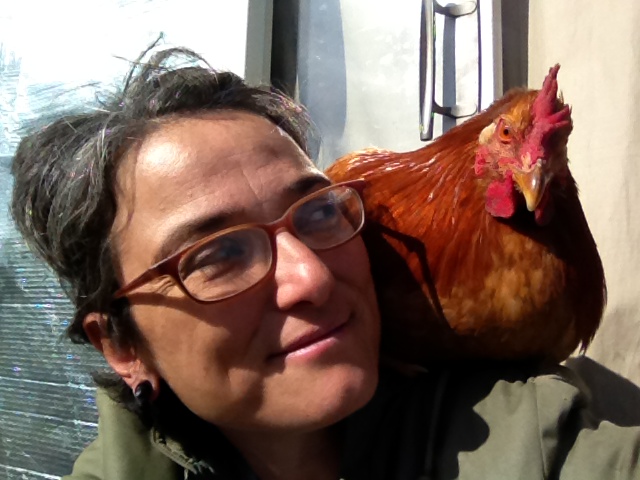
Agnes was my favorite.  Yes, I named my rooster Agnes.  Well, I named my hen Agnes, but she turned out to be a rooster.  As a chick, she was friendly.  When I wouldMe and Agnes go to feed them, she would jump on  my lap and snuggle with me.  I would sing to them, and she would sit on my lap.  When she was old enough, I put her in with the layers.  I sat in the chicken yard with her as she got adjusted, and the first night, she stood by the door as I left, calling for me.  I had a hard time sleeping that night.  The next morning, she was right there with the others waiting for morning treats.  I kept her in so she would get used to her new home and I could trust her to come back to the coop at night. That’s when I heard it…a crow.  I turned in time to see Agnes letting out another big cockle-doodle-do!  My heart sank. We couldn’t keep another rooster. We already had 2 roosters.   But Agnes wasn’t just any rooster. She would jump in my lap or up on my shoulder to visit. She would let me stroke her feathers and listen as I planned out my day or complained about what I didn’t get to that day. So, I talked Fred into keeping her.  She and Ron Rico, the other rooster, would take their girls out foraging. They would both come up and visit with me and have snuggle time.

I went home for a visit and Fred told me Agnes was missing.  My heart was breaking.  Hopefully she was hiding and safe for the night. But she wasn’t. Something had gotten her when she was out foraging way too far from the farm.  I couldn’t stop crying.  My first morning back, it was hard to do chores with the chickens.  I wanted Agnes.  Ron Rico came up to me and so did Pee-Wee, another chick I had kept.  Both sat with me and listened as I grieved.

At times I think I shouldn’t get so attached to the animals. That I can treat them well and with kindness and not be attached.  But I don’t want to do that. I want to have some favorites. I want to have an attachment to them. It’s part of the enjoyment of having them.  When I need a break or an ear to bend, they are there for me. I never thought I would be so attached to a chicken…or two…or three..but I am.  I miss my Agnes.


Filed Under: Our Animals Tagged With: chickens

  • « Previous Page
  • 1
  • …
  • 4
  • 5
  • 6

Welcome to Stuart Farm!

We’re Serena and Fred Stuart. While raising healthy and happy animals is our #1 goal, we’re also here to serve you! If you’re looking for help in navigating healthy eating and living, you are in the right place! We’re here to answer your questions and help you feed your family meat and eggs you can feel good about. We share farm stories that gives you a peek into our life, recipes to try, health tips, and more. We hope you enjoy coming along on our farm adventures.

Connect with us

  • View StuartFarmLLC’s profile on Facebook
  • View stuart_farm’s profile on Instagram

Contact Us

573-764-2324 please leave a message .
Farm hours are by appointment only.

Tags

Beef recipes broth chickens delivery Devons Dorkings Eggs Farm Life Freedom Rangers garden lard pigs Pyrs raw diet recipes recipes sweets Silver Fox Rabbits Sugaring

Categories

  • Blog Posts (73)
    • Farm Life (39)
    • Mother Nature (1)
    • Our Animals (24)
    • Our Garden (2)
    • Pigs (5)
    • Projects (1)
    • Recipes (16)

Recent

  • 2025-2026 Our Years of Transition
  • Our Farmstay Is Now Open!
  • The Best Way to Take Charge of Your Health
  • Love is…
  • My Summer Reading List

Archives

Copyright © 2026 · Focus Pro Theme on Genesis Framework · WordPress · Log in

Loading Comments...