Stuart Farm

  • Our Story
  • Shop
    • Our Store
    • Where to Buy
  • Come Enjoy a Farm Stay!
  • Our Classes
  • Fertrell Products
  • Contact Us
  • Blog Posts
    • Our Animals
    • Mother Nature
    • Our Garden
    • Recipes
    • Farm Life
    • Projects
  • Consultation Services
  • 0 items

Do You Know Where Your Food Dollar Goes?

Posted on May 22, 2019 Written by Serena Leave a Comment

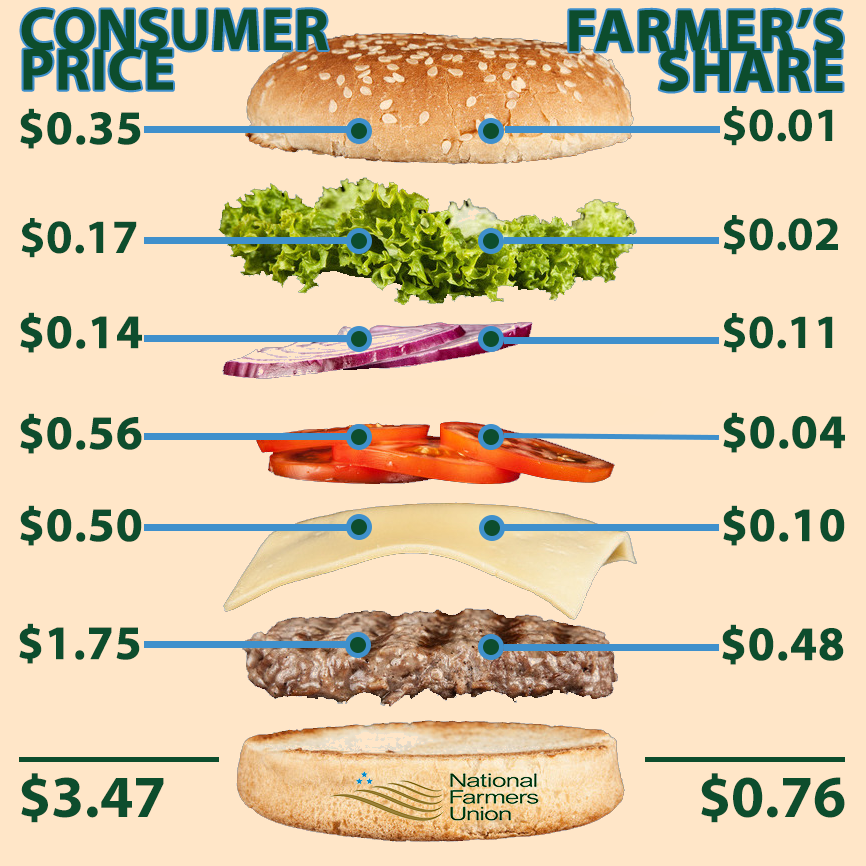
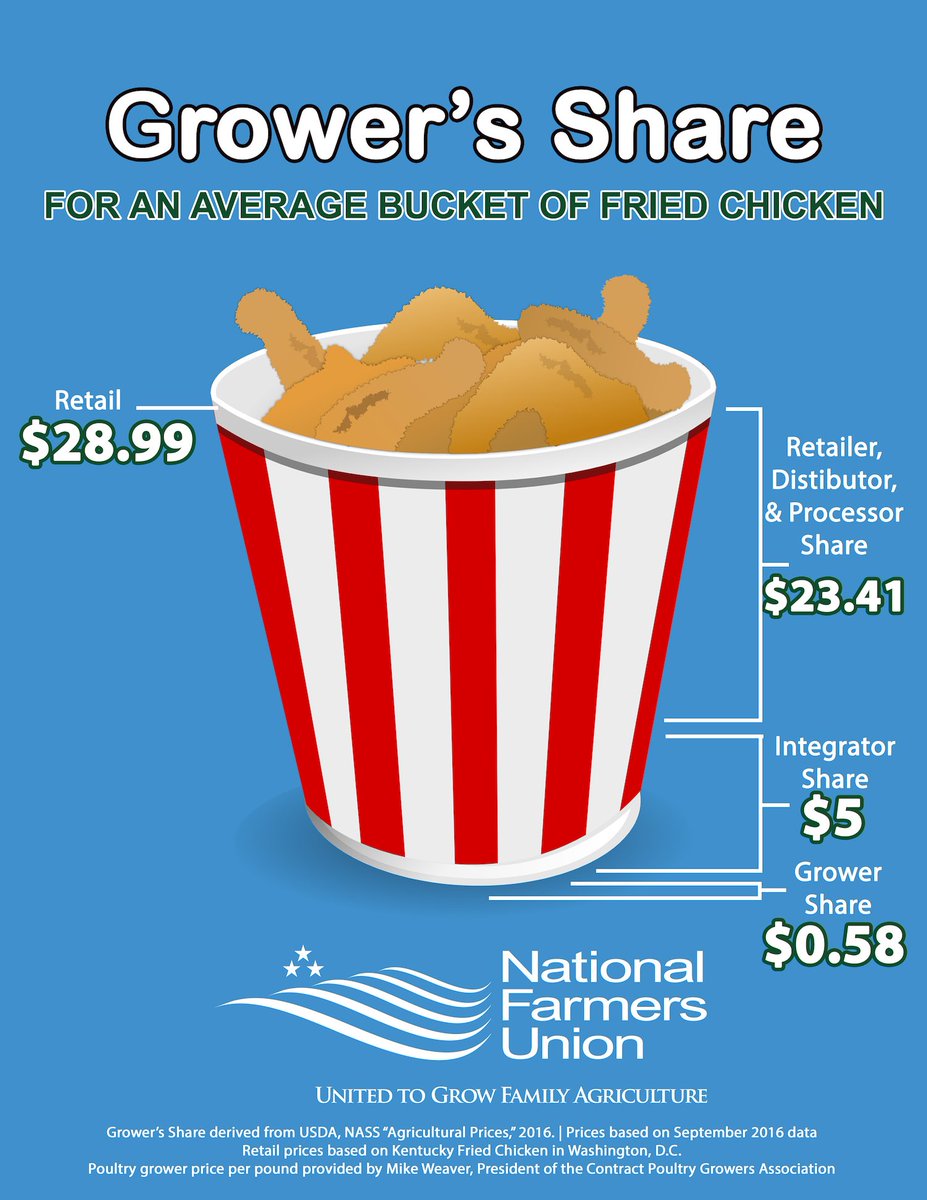
When you buy a pack of steaks or pound of tomatoes at the store, do you know how much of that goes to the farmer who produced it? You may be surprised.
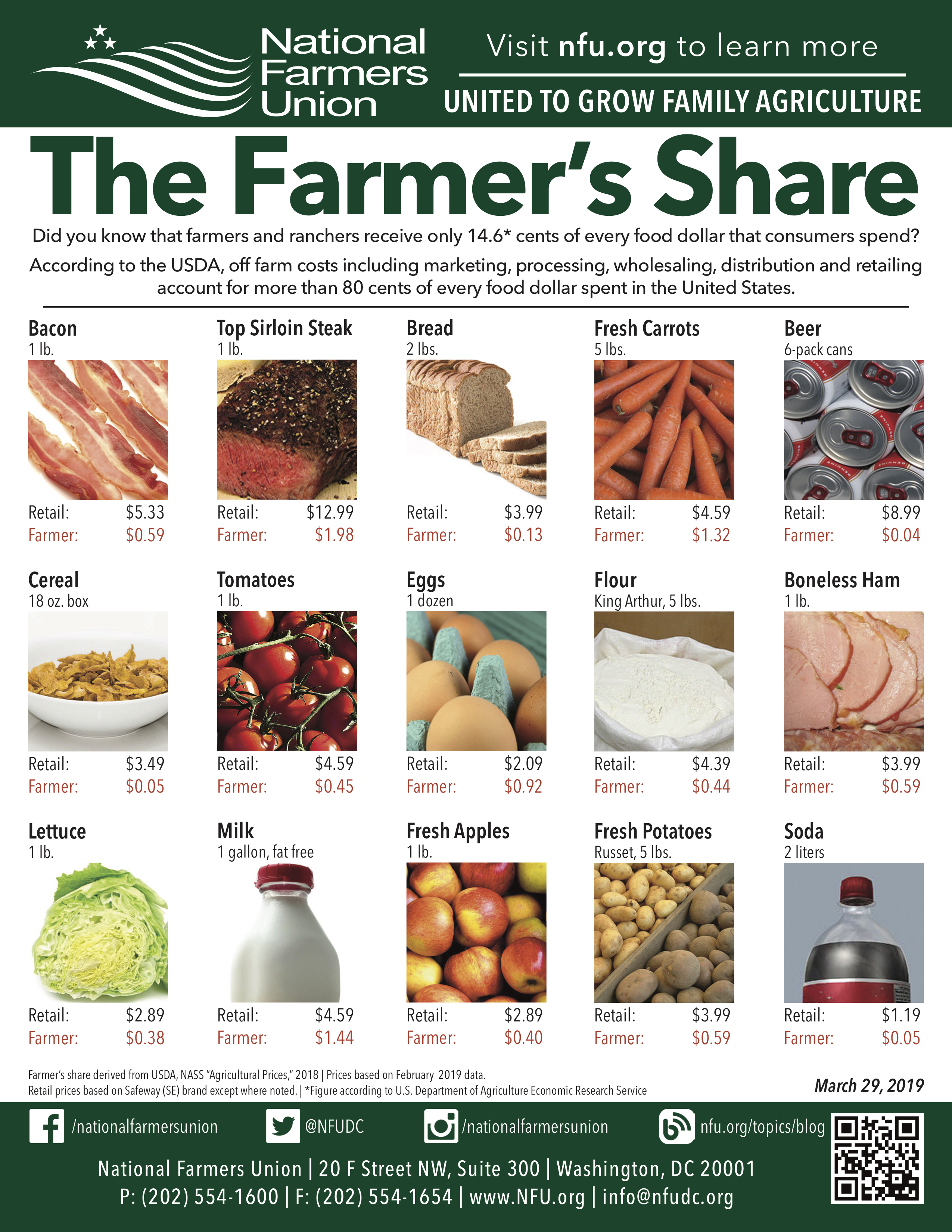
Right now (May 2019) at the sale barn, hogs are going for 50-60 cents per pound live weight.  A 300 lb hog will bring $150-180. Can you imagine? The labor in raising a hog for 5-7 months, feeding it, watering it, the equipment, the fencing and/or barns, etc. YIKES!  But at that sale price, you make about $1 per day per hog.

To make any money in that system, you have to have quantity.  For the 10 or so hogs we butcher a year, there’s no way we could survive.  You have to raise hundreds to make it worth it. And the more you raise, the more efficient it must be or you lose money. That’s where concentrated animal feeding operations (CAFOs) come in. That’s another post, but basically, farms where pigs are housed on concrete, cattle in dirt lots, and chickens in buildings. Some or all never get to be on pasture.

So if you want the farmer to get more of their share and you don’t want to support CAFOs, what can you do?

1–Buy from small local farms like ours.

Your money goes directly to us and into our community.  Not a middleman, not a distributor, not an advertising company. Your money goes to us and the companies we buy from.

We buy as much as we can from local farmers, small businesses, and locally.  We get corn and wheat from farmers that grow on our family farm and within a 15-mile radius.  Our soybean meal comes from a co-op in southern Missouri. We buy chicks from a family farm in Pennsylvania.  We buy from local mills, MFA, Orchlens, and local auctions.

2–Use your food dollars to make a statement about how you want animals raised.

We have a lot of customers that struggle with knowing where their food comes from.  If you think seeing the pictures is hard, I can assure you having them in your life every day makes it REALLY hard come butcher day.  But putting your food dollars into a farm that raises animals humanely and allows them to live how they are meant to, does send a message to Big Ag.

Farms like ours, make up less than 5% of the pork consumed in the US. Big AG wants that back, so don’t be fooled by their marketing. Just because they don’t use farrow crates doesn’t mean pigs are on pasture wallowing in the mud. Just because it says free-range doesn’t mean chickens are frolicking in the meadow.  Unless you can go and see the animals, you won’t know for sure how they are raised and treated.

3–You can also make a statement about how you want the environment cared for.

A lot of farmers raise a variety of livestock that work together.  Cattle before goat/sheep, then chickens, then some rest before the cattle start to graze again.  Pigs root up unproductive ground for re-seeding. The soil is never over-fertilized or tilled.  Chemical pesticides and herbicides aren’t used. Soils are built up with organic matter from winter pasture feeding or bedding. Waterways are protected and native plants are left to flourish.

Agriculture practices change when it’s profitable. Every time you purchase from a farmer using sustainable organic practices, the farmer who isn’t, takes notice and hopefully, one day will make the changes.

When you buy from someone you can talk with, ask questions, and really understand what and why they do what they do, you can make an informed decision about where your food comes from and what your food dollar supports.

Do I want you to buy from us? Of course! But I would be just as happy knowing you found a farmer you like and trust to provide your food. Ask questions. Go to the farm. Know your farmer.  It will make a world of difference in the food you eat and in a farmer’s life.
Filed Under: Farm Life

A Day in the Life of Your Farmer

Posted on May 15, 2019 Written by Serena 6 Comments

What I write on our blog hopefully gives you a glimpse into what we do and what we go through. I could give you only the picture perfect idyllic farm life stories and photos, but I wouldn’t be telling you the truth of our life. Yes, we have those moments, but so many more are heartbreaking and soul-crushing, backbreaking and nerve-wracking. Those are the moments I need you to know about.
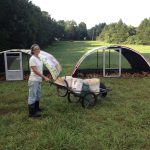
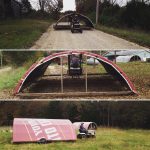
The first thing you should know is the way we raise our animals is a lot more work than factory farms.  A LOT more work.  It would be soooo much easier to keep everyone in confinement all year.  Our work would be cut by more than half.  But so would the quality of the end product, the quality of their life, and the quality of our life.  So, we put in the work.

So what does a typical day look like? I have no idea. No day has ever been typical.  Almost every day, something goes wrong.  Cattle are out. Something breaks. Something isn’t working. I remember something I need to do RIGHT NOW, so the whole day changes. But if everything went well, this is what our day would look like.

5:30 am Wake up

  • Serena drives the morning school bus route
  • Fred feeds the pigs and layers
  • Breakfast
  • Fred either goes to his off-farm job, or we both start our farm work.

8am Start Chores

Meat birds on Pasture (done twice a day for 5-8 weeks)

  • Drain 4-6 five gallon buckets of feed, add 3+ lbs. of supplement, mix, fill three 5 gallon water jugs, load it all on a trailer and drive it out to the pasture.
  • Unleash the chick-nado from the tractors (seriously, it is like a tornado of chickens when they come out) wait until they calm down and start to forage.
  • Fill feeders.
  • Move tractor to new grass.
  • Change out 5-gallon waterer.
  • Overall health check.
  • Move chickens back into tractors.
  • Do this for all 4-6 tractors.
  • If needed, move three 185′ electric netting fences on to new grass.
  • Cart all the empty buckets back to the feeding station, refill with grain and water.  Stir all buckets. We ferment our feed, so the 100 pounds we feed a day, doubles with water weight.

Meat Birds in the Brooder (done 3-4 times a day for 3 weeks)

  • Drain 3-gallon bucket of food.
  • Clean and refill waterers.
  • Stir bedding.
  • Overall health check.
  • Fill feeders and feed chicks.
  • Refill feed, water, and stir all buckets.

Layers (done twice a day)

  • Check/fill waterers. Replace 5-gallon bottle if needed.
  • Drain feed, add supplement, mix, and fill feeders.
  • Overall health check.
  • Collect eggs; in the morning, at lunch time, before evening feeding.
  • Move wagon every day and move ten 185′ electric netting fences every 2-3 weeks.
  • Refill feed, water, and stir all buckets

Cows (once a day)

  • Move fence if they need more grass.
  • Check/fill waterers.
  • Overall health check.
  • Haul 300 gallon tank to refill waterer.

Pigs (once a day)

  • Drain 5-12 feed buckets, add supplement, mix, load into truck.
  • Drive next door and carry buckets to pig area.
  • Fill feed pans.
  • Overall health check.
  • Check waterers.
  • Fill waterer reservoir if needed.
  • Refill feed, water, and stir all buckets

10am-ish -12pm  This is either project time or business time;  gardening, mixing feed/supplement, fence work, brush hog, general clean up from other projects, paying bills, assessing new pasture for cows and pigs, cleaning equipment, building new chicken tractors/feeders/waterers, work on business advertising, inventory, bills, getting ready for market, packaging eggs.

12-1pm Lunch; dishes and/or laundry if needed

1-3pm Whatever project we were working on before lunch, we try to finish.

3pm Serena drives afternoon school bus route

5:00 pm Start evening chores–same as morning chores.

8 pm dinner and bed.

Whew! But then you have to add things in like cutting, baling, and putting up 1000 square bales, butchering chickens, fixing car problems, getting ready for market, going to pick-up feed or meat, laundry, bathing a calf because of rain scald, putting up fence, wrangling an escapee calf, washing feed buckets, dealing with broody hens and chicks, clearing space for a feed delivery, monitoring heat cycles for AI, brushing our working dogs so they don’t have a heat stroke, animal births, emergencies, etc.–the day gets very full, very fast.  There are some days we are so sore everything just takes longer. There are some days I am so overwhelmed everything I do is with tears in my eyes.

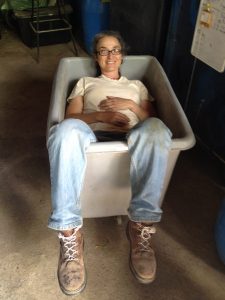
When winter comes, we have a break from some chores, but others get more difficult–like breaking a 6″ sheet of ice in a water tank and our bathtub turning into a fermenting station for feed buckets. The layers still get rotated through the pastures daily, while the cattle and hogs can stay a bit longer in theirs.  We hope the tractor doesn’t break down so we can move hay bales.

Some days, we have farm tours, a friend stops by, or our farm photographer comes out.  Those days we get to see our farm through someone else’s eyes. We get to slow down and appreciate all the work we do and all the progress we’ve made.

Through the hustle and bustle, we enjoy what we do and knowing we’re feeding families food that’s healthy and raised with care and respect. It’s long days and sometimes long nights, but we can’t imagine doing anything else.

Hauling feed buckets to the meat chickens.
Moving day.
Helping a piglet nurse at midnight.
Grooming out Zeke’s winter coat is a 7 hour job; yes, I timed it.
Work doesn’t stop for snow.
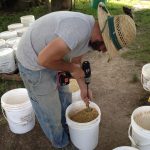
Mixing, grinding, and fermenting, our own feed is a lot of work, but it shows in the end product.

Filed Under: Farm Life

Life Lessons from the Farm

Posted on May 8, 2019 Written by Serena 2 Comments

Not everyone can be or wants to be, a farmer.  Like every path you take, there are certain lessons that come with it. Being a farmer has given me some pretty good life lessons I’d like to share with you.
1- I can’t be happy if I’m never sad.

You know the idyllic photos of farm life that make everything look fun and wonderful? We have some of those. When we can stop for a minute and watch the chickens foraging, the cattle move perfectly in a line across a pasture, or the birth of piglets, it all seems so perfect.  We have moments that fill our hearts and souls with gratitude for being able to do what we do.

As wonderful as those moments are, farm life also means sadness and loss. And as full as my heart gets with joy, it also gets that full of sadness. A piglet dies, a chick gets injured, a calf loses its mother. It’s gut-wrenching. It’s also what makes a farm a farm and life, well, life.

We bask in the happy times and trudge through the sorrow to do what we need to do.

2- There’s always more to do, so take a break.

The list is never-ending.  The list will always be never-ending on a farm. Taking a break will not make it any longer. Working all the time will not make it any shorter.

Fred is much better at this than I am. I have a hard time “turning off” work, but I try.  Sometimes my break is sitting with the pigs giving belly rubs, sometimes it’s vegging on my phone with a game. Sometimes we make popcorn and watch a movie. You can’t keep going if you don’t take a break.

3- Eating in season is the best.

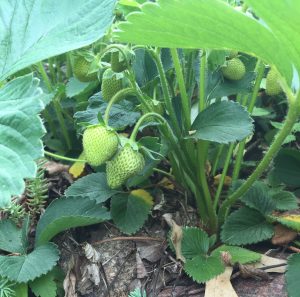
When we have everything available all the time, it’s no longer special. Right now, I am eagerly awaiting that first red strawberry in the patch. It will last a month, fresh just picked berries, then I have a year to wait. When my garden gave a bounty of squash, I never tired of it. Soon enough the squash bugs decimated them and that was that; no more squash.

After our first batch of pigs, we never bought pork from the store again.  That meant we didn’t eat pork for about a year while we waited to get more pigs.  When we are out of beef, we wait until another goes to the butcher.  Just like produce is seasonal, so is meat.  That first pork chop or burger after a long wait is sooooo tasty!

4- Slower is faster.

This came from my old-timer friend, D.D.  We were chatting over lunch about things we needed to do and the conversation turned to moving livestock. He said one thing he learned early on was you can’t rush things or they just don’t work out, especially moving animals.

I also find it’s true for just about everything I do. Trying to hurry through a recipe ends in a ruined dish because of an omitted ingredient. Collecting eggs too fast leads to broken shells. Anything that’s done too fast, you risk bad results and more work. Slower really is faster in the end.

5- Some days are just hard.

Sometimes it’s related to the sadness I mentioned in #1, some days it’s trying to get something done and failing. There will always be days that are just hard.

The good thing about this is, so far I have successfully survived every hard day I’ve ever had.  And if you are reading this, I am guessing you have, too! Whether physically or emotionally hard, we’ve made it through and know we can do it again.

Hard days will come, and end. Just like the sad days, just like the happy days. The seasons will come and go with an overabundance of one food and never enough of another.  There will always be work to be done and the need to relax.

But what I have really learned in my time farming is being where you are supposed to be, doing what you are meant to do, and having those you love with you along the way is all you need in life.

Filed Under: Farm Life

Imperfect Produce: Why You Should Love Ugly Food

Posted on May 4, 2019 Written by Serena Leave a Comment

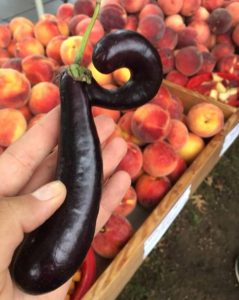
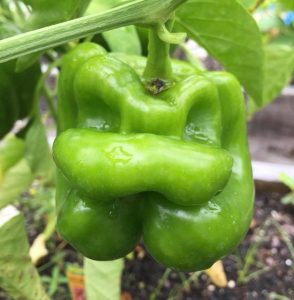
From The Ugly Food and Veg Campaign Facebook Page

How many times have you picked up a not so perfect piece of fruit or vegetable and put it back on the pile?

We’ve all done it, but have you ever wondered why?

The Journal of Marketing wondered and the results may surprise you: “buying unattractive produce negatively impacts consumers’ view of themselves”.

WHAT?! Ugly food does not mean an ugly you, let’s get that straight right now.  I thought the reason would have been people think ugly food = less nutrition or quality.  Which also isn’t true.

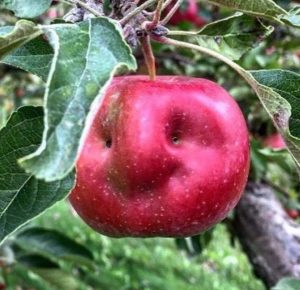
So what does it mean when we pass up that twisted carrot or lopsided apple? A LOT of waste.

There is a big push to market “ugly food” and save grocers $15.4 billion dollars of edible, yet discarded, fruits and veg a year.  Farmers leave approximately 30% of their harvest in the field because of imperfections.

For small family farms, wasting 30% of their harvest is not an option if they are to succeed. Sure, some can be kept for themselves. I know a farmer who harvests about 1,000 pounds of tomatoes a season, but I doubt he is eating and/or preserving 300 pounds worth.

So what do they do? They bring it to the market and hope customers see past the blemish or odd shape.

IG Pic by @nobie1

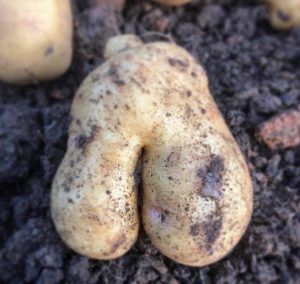
Since there is no nutritional or taste difference, how can we convince ourselves to choose that gnarly potato or bruised peach? It’s not easy, but when you look at the big picture, I think we can do it.

Like I mentioned, small farmers can’t afford to compost or trash 30% of their harvest.  So buying those less than perfect items keeps money in their pocket.

Remember, if you’re choosing organic produce, it’s even harder to keep it blemish free. Personally, a perfect organic apple makes me very suspicious.  As does organic greens without a few holes from hungry bugs. Buying this ugly food is an incentive for organic and sustainable farming practices which leads to healthier soil, air, water, and you.

The article didn’t say how much that $15.4 billion dollars of produce weighed, but I am guessing it’s more than anyone wants to see go to a landfill.

The idea that ugly food is sub-par just isn’t true. I hope when you’re shopping and see that very special piece of fruit or veg, you buy it knowing you are helping to support a farmer and reduce food waste.

If you want to get a glimpse into what food waste looks like, click to watch, Just Eat It: A Food Waste Story. 

If you buy some ugly food, feel free to share it with me!

IG Pic by @maiabanayan
IG Pic by @a_is_for_enigma

Filed Under: Farm Life

  • « Previous Page
  • 1
  • …
  • 5
  • 6
  • 7
  • 8
  • 9
  • …
  • 19
  • Next Page »

Welcome to Stuart Farm!

We’re Serena and Fred Stuart. While raising healthy and happy animals is our #1 goal, we’re also here to serve you! If you’re looking for help in navigating healthy eating and living, you are in the right place! We’re here to answer your questions and help you feed your family meat and eggs you can feel good about. We share farm stories that gives you a peek into our life, recipes to try, health tips, and more. We hope you enjoy coming along on our farm adventures.

Connect with us

  • View StuartFarmLLC’s profile on Facebook
  • View stuart_farm’s profile on Instagram

Contact Us

573-764-2324 please leave a message .
Farm hours are by appointment only.

Tags

Beef recipes broth chickens delivery Devons Dorkings Eggs Farm Life Freedom Rangers garden lard pigs Pyrs raw diet recipes recipes sweets Silver Fox Rabbits Sugaring

Categories

  • Blog Posts (73)
    • Farm Life (39)
    • Mother Nature (1)
    • Our Animals (24)
    • Our Garden (2)
    • Pigs (5)
    • Projects (1)
    • Recipes (16)

Recent

  • 2025-2026 Our Years of Transition
  • Our Farmstay Is Now Open!
  • The Best Way to Take Charge of Your Health
  • Love is…
  • My Summer Reading List

Archives

Copyright © 2026 · Focus Pro Theme on Genesis Framework · WordPress · Log in

Loading Comments...