Stuart Farm

  • Our Story
  • Shop
    • Our Store
    • Where to Buy
  • Come Enjoy a Farm Stay!
  • Our Classes
  • Fertrell Products
  • Contact Us
  • Blog Posts
    • Our Animals
    • Mother Nature
    • Our Garden
    • Recipes
    • Farm Life
    • Projects
  • Consultation Services
  • 0 items

2013–The Year in Review!

Posted on February 2, 2014 Written by Serena 6 Comments

photo

“Figure out what works for you and do it. Then do it again. But first figure out what works for YOU.  To figure out what works for you, you have to move, you have to try, you have to fail, you have to look silly, you have to shine, you have to cry, you have to be on the edge of giving up and pull yourself back, you have to ignore how everyone else is doing it. You can’t figure out what will or won’t work by thinking about it forever and doing nothing.”—Christie Halmick

A good friend of ours posted this on Facebook and it rings true to what have been doing the past 2 years. And after much consideration, deliberation, and uncertainty, we are getting closer to figuring out what works for us. It has been a tough season for us. Crazy weather, major surgery for 2 family members, doubling our chicken production, haying, new animals, buying a house, etc. We made it through it all, but there were a lot of things we didn’t have time for…like my garden.  And there were lots of times that crying and giving up was all I wanted to do.

One thing I have learned about having a business is the necessity of reassessing your goals and figuring out how to keep your work from feeling like a job. About half way through our season, we both started to feel a bit run ragged. So we reassessed.  What is it that we want for us? For our customers?  What can we realistically do and keep our sanity and not go into debt?  One of the hardest things about trying to answer these questions is knowing all the awesome people we do, who are doing amazing thing.  Things WE want to do as well.

You know so-and-so got ducks. AW, I want ducks!
Maybe we could get a couple of alpacas…?
He has a yak for sale?…I WANT A YAK!!!

And so it goes, making it harder to stick with what we want and what we can do at this point in time. Because seriously, I WILL get a yak some day.  But the good thing about me and Fred is that we both mull things over. We ponder. A lot.  No snap decisions here, that is for sure. So after a lot of pondering, we have good news and not so good news to share.  First the not so good…

It is with a very heavy heart that we announce the downsizing our chicken production next season. We have loved providing all of our customers with healthy tasty chicken and being a part of the Bem General CSA. We doubled our production from last year and still sold out. With this overwhelming support from our community, it makes it even harder.  Chickens are a lot of work, both to raise and process.  Since we can’t bring ourselves to do the 2 things that could make continuing chickens easier..1- raising Cornish Crosses and 2- having someone else do the butchering…we have to downsize to make room for other ventures. We love raising chickens and will continue on a much smaller scale during the fall for family and friends. Raising fall chickens uses less electricity for brooding, keeps them from being heat stressed in the summer, and provides more pleasant weather for butchering. We will have some extras available, and I will keep that info up-to-date on the website.
photo
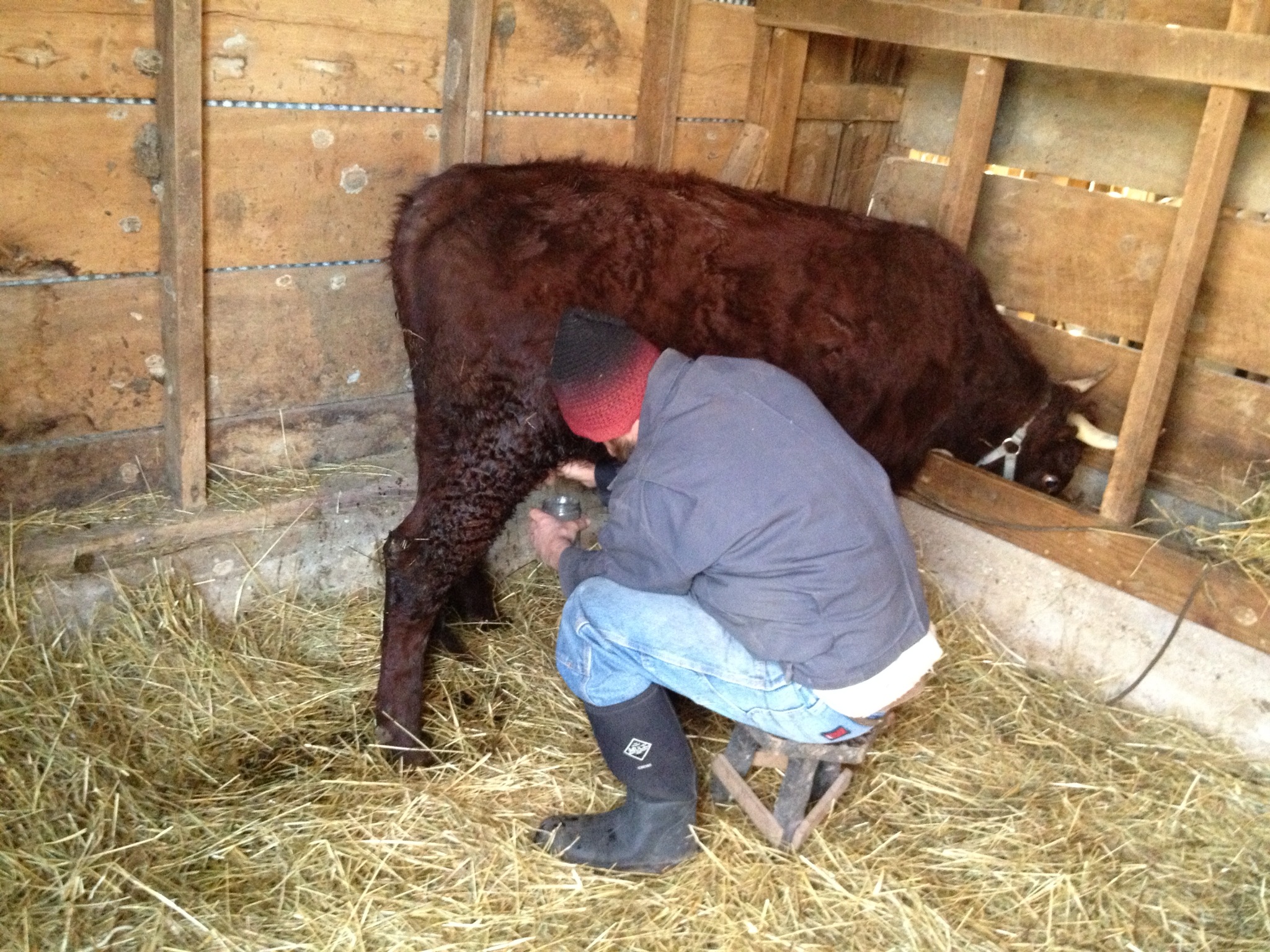
Fred milking Momma.

AND THE GOOD!!!
This summer we bought our own farm and have expanded our livestock to include dairy cows and rabbits. The Milking Devon cow, Momma,  is now milking and the calf, Clem (short for Clementine),  is working on her oxen commands.  Momma was artificially inseminated in November, and hopefully we will have a calf soon.  We would like all our Devons to have oxen training to some extent. Once we are able to increase our herd, we will be offering Devon beef, as well.  Our silver Fox rabbits will hopefully provide us with another meat source and allow me to try my hand at tanning.
Missy's House 6_18_2013
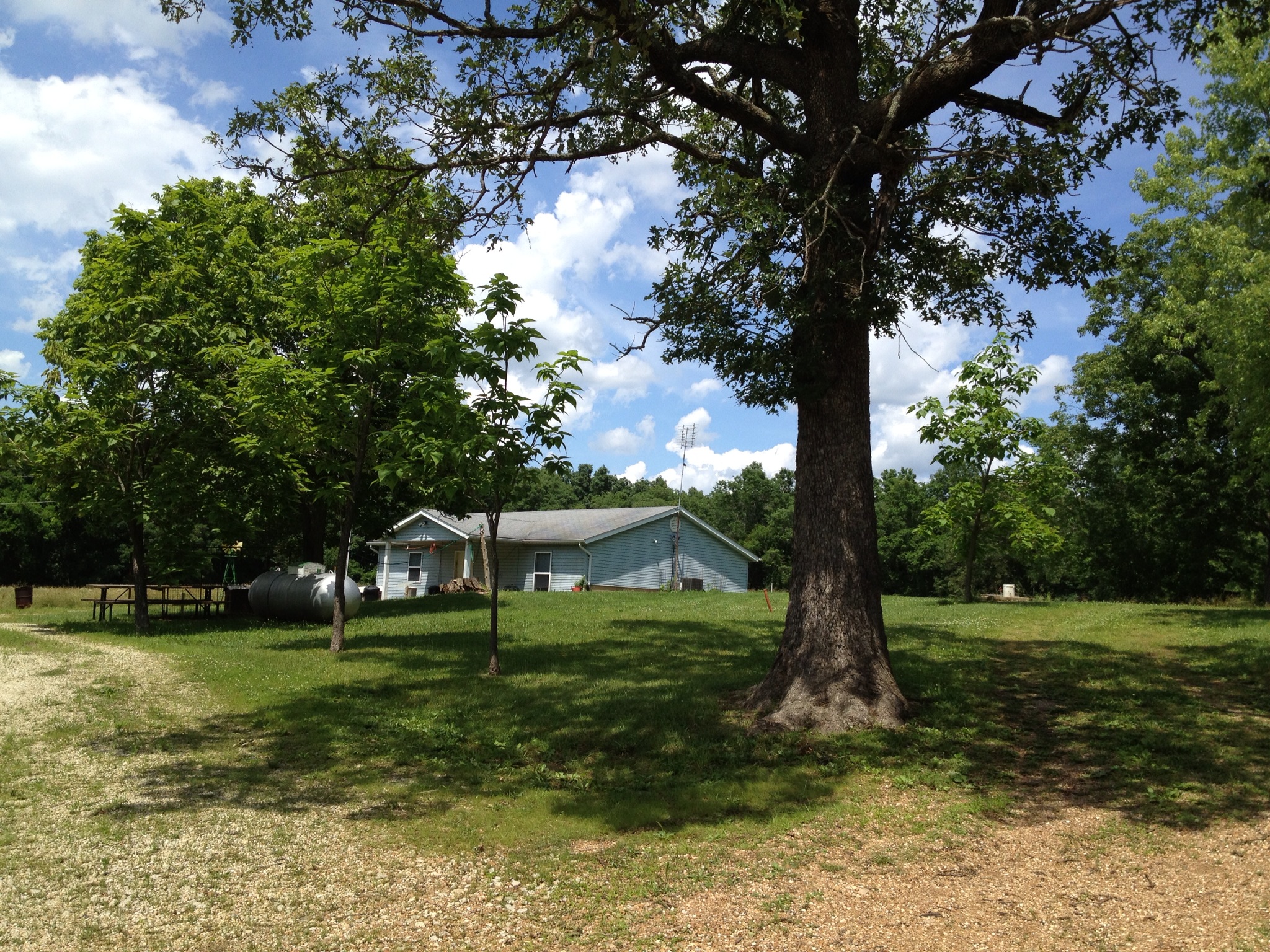
The new house!

The farm needs a lot of work. Besides cleaning out and fixing up all of the out buildings, we also need to get a good perimeter fence put up. Thankfully the pastures are in pretty good shape.  We started cleaning up all the outbuildings and have great plans for restoring the old chicken house (maybe with the help of some straw bales or earth packed tires),  making one into Fred’s workshop, and maybe offering a B&B in the “little house” that sits on the original foundation.  We are still a long way from all of that, but each time I clear out a space, the vision of what we will have gets clearer.

While there is a lot to look forward to, we also got a lot accomplished this year.
– Even though we are trying to move away from haying towards extended rotational grazing, we put up approximately 900 square bales (that’s twice as much as last year and a HUGE thank you to the Halmicks for their help).
– We started our Milking Devon herd and tried out artificial insemination (thanks Dr. Koch).
– We built a 1/2 acre chicken oasis for our layers to have a safe place to roam.
– Our two steers were butchered.
– We made a new bigger chicken tractor and a brooder house.
– We participated in Gerald Mule Days processing sorghum grass into sorghum syrup.
– We had 2 hens hatch out 8 chicks.
– We produced a gallon of maple syrup.
– We started harvesting duckweed as a food source for our animals.
– We raised 4 Wessex Sadddleback pigs.
– After a great apple season, I canned apple butter and applesauce and dehydrated some (thanks John and Adele).
– Fred’s parents had a lot of tomatoes, so I canned about 2 gallons of rotel.
– We received a Slow Foods Grant to help promote heritage breed livestock.
– I applied for a SARE grant to conduct research on the farm.

I know I am forgetting other accomplishments, so let’s just say it was a busy and productive year.

And the BEST news…Fred and I are getting married!  Christmas morning Fred surprised me with a hand carved engagement ring.  We had talked about marriage earlier in the year, and I figured that started the pondering clock, so it would be another year or two before he asked.  I did not need any time to ponder my answer.

2013-12-26 09.26.05
Fred carved my engagement ring from a walnut tree on the farm.

Again, we would like to thank our family, friends, and customers for their support, help, and understanding throughout the year.  We have big plans for 2014, so make sure you sign up for email notifications to be the first in the know!
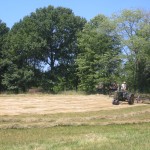
Getting the hay ready to bale.
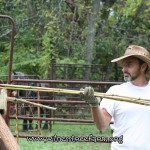
Pressing sorghum grass to make sorghum syrup.
Our first hatch!
The new chicken oasis.
Maxie with the chicks in the new tractor.
My two favorites I had to say good-bye to this year, Ron Rico and Pee-Wee.


Filed Under: Farm Life

Ron Rico, The Dorking Rooster

Posted on October 30, 2013 Written by Serena 5 Comments

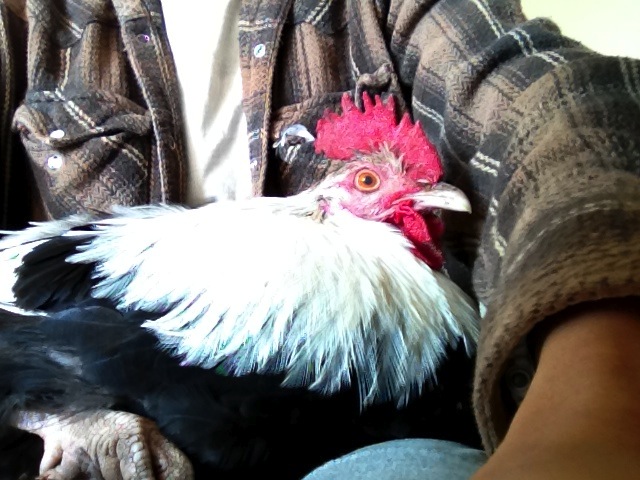
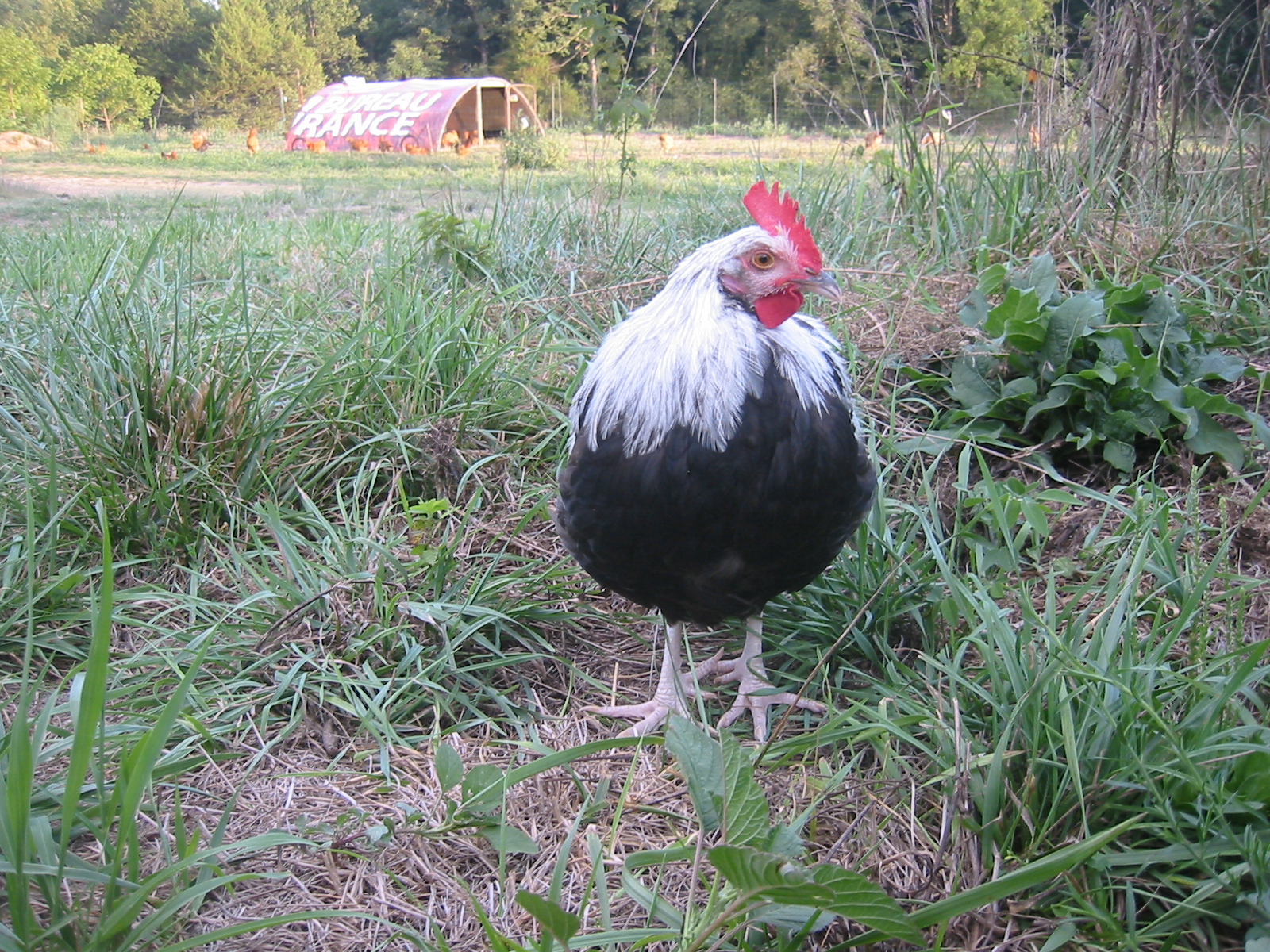
ImageWhen we decided to start raising Dorkings, the search was on to find some breeding stock.  Chicks are hard to come by, so when I found a young rooster about 2 hours away in Columbia, we decided to get him.  I sent my deposit, and she sent a pic. I immediately named him Hamlet. A month later, we drove up to get him.  By the time we got home, I knew he wasn’t a Hamlet.  He was sweet and would come when I called him.  He would let me hold him and stroke his feathers.  This was no mean “I’m going to spur you when you turn your back” kind of rooster. He was a lover.  He was fancy.  He WAS Ron Rico.

IMG_6690
New to the farm.

The girls took a while to get used to him. The old ladies would torment him. I mean chase him around the yard and coop relentlessly. The younger girls just liked that they could nip at him and finally feel superior to someone.  We had a batch of meat birds close to the barn, and Ron Rico took to them. He would walk back and forth and back and forth along the fence, showing off his beautiful feathers, trying to entice someone to come close.  A few would, but poor Ron Rico, like most young boys, would turn into a spaz and they would run away (this was the bunch that Agnes was in).   We saved about 8 from that bunch and Ron Rico and Agnes shared the flock nicely.

IMG_1939
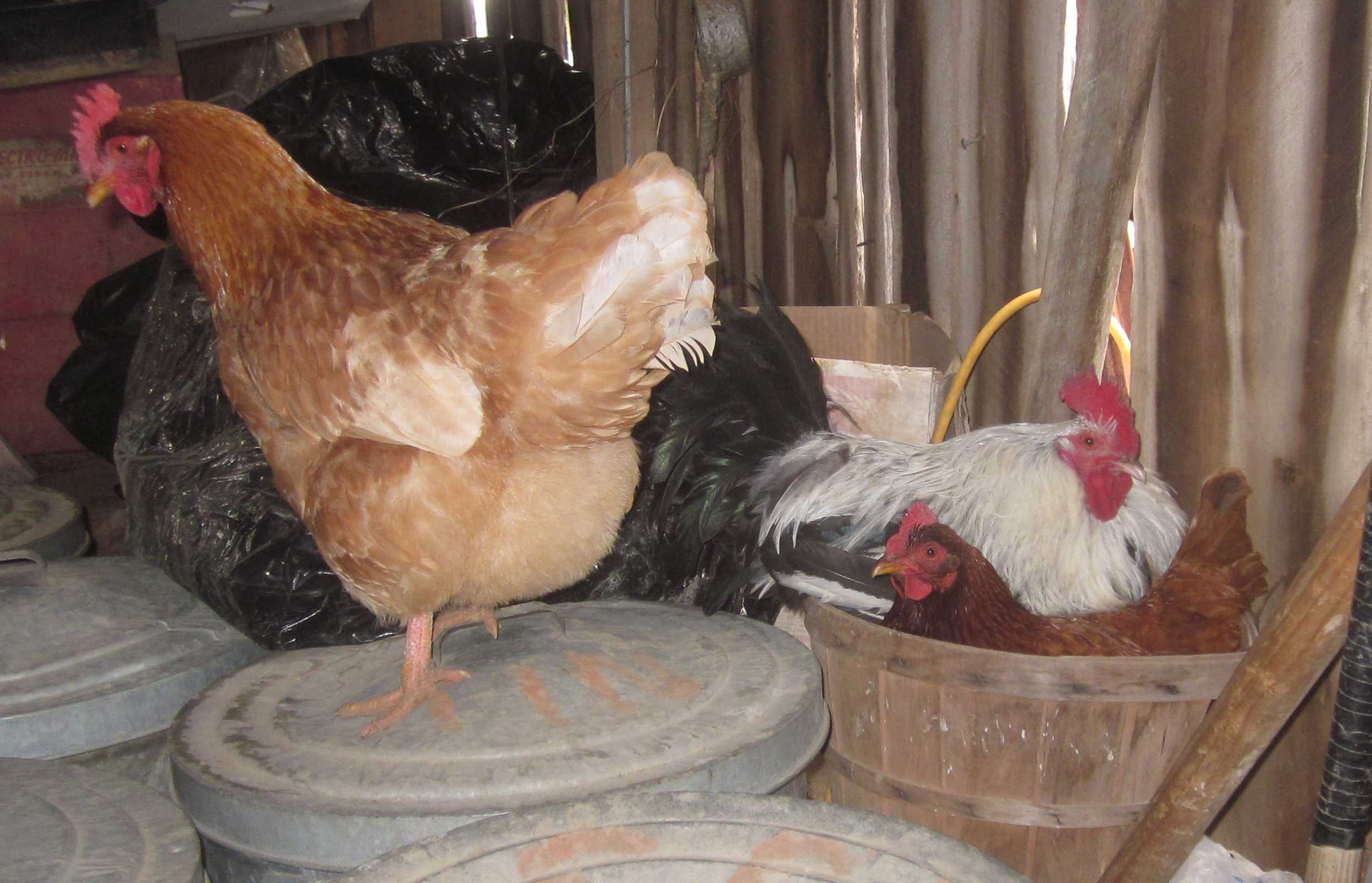
Ron Rico getting cozy with one of the young girls in the nest bucket. Old Lady is disgusted by the whole thing.

By the time Agnes was gone, Ron Rico had finally come in to his own, perfected his crow (oh it was such a SAD crow to start with!), and started to look out for all the girls. Part of a roosters job, besides breeding, is to make sure his flock has food and warn of any dangers. So he would cluck and coo when he found something good to eat, or send out the alert when a hawk was overhead. Although the old ladies seemed to ignore him most of the time.  When he started to take care of his breeding duties, I wasn’t quite sure if he was completing the task.  You see, besides the characteristic of one extra toe, Dorkings also have short legs.  Very short legs. While most chickens look like they are high-stepping when they run, Dorkings go into low rider mode and hug the ground.  It was very funny to watch him chase the girls. He never seemed to be in quite the right position.  But apparently I underestimated his ability.  We had 2 girls go broody and 4 out of 7 hatched the first time and 4 out of 9 hatched the second time, with 3 more that didn’t develop in enough time to hatch.  So that is a pretty damn good fertilization rate.

2013-01-21 10.25.56
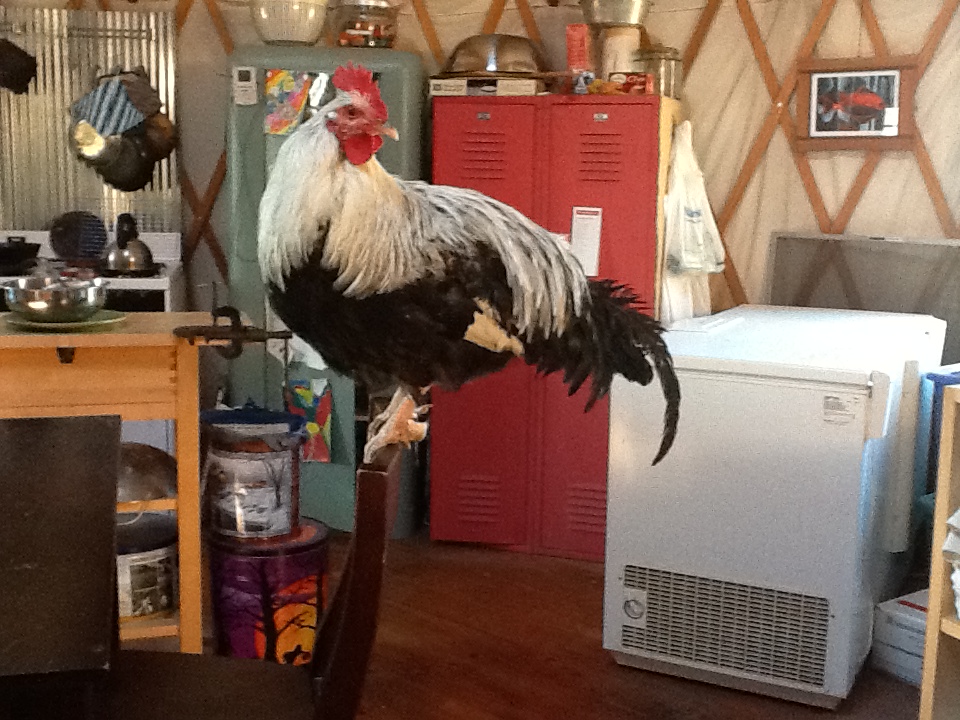
After surgery, Ron Rico gets to hang in the house.

But poor Ron Rico had his problems.  Mainly injuries. He had a cut on his extra toe that needed surgery twice, countless patching to his comb from the girls pecking him, and a trip to the vet for a huge gash on the back of his neck.  I think he may have just cut his toe and I didn’t notice until it was swollen. I did surgery solo once, the next time I needed Fred’s help. The gash on the back of the neck was interesting.  We were in the creamery finishing up butchering when Ron Rico jumped on the step and kept looking inside. I though it was odd, but went about my work.  After a few minutes, he was still there, just walking back and forth. I asked Fred, “what is his problem?” With that, he turned his head so I could see the blood down his back. I freaked.  I went out to find a cut from one side of his neck to the other that was perfectly straight and looked like someone used a razor.  The blood had coagulated enough to stop blood loss, so we cleaned up, and got him to the vet. This is where having a sister-in-law as your vet helps.  She met us at the clinic and cleaned and sutured him up. We were all amazed at how well he did.  With nothing to numb him, he sat there perfectly still and let her fix him.  One flinch, but nothing like you would expect from a rooster having surgery.  He was like this with all of the surgeries and bandaging. It was amazing.  After a couple of weeks, the scab fell off and he was as good as new. I still have no idea how it happened.

Since our goal was to breed Dorkings, and we had bought some chicks, I knew the day would come when we would need only one rooster.  Orville was still too young to breed, and I thought maybe Ron Rico would be the better quality bird so he would be spared.  But on the morning we were moving everyone to our new house, I found Ron Rico dead. We moved everyone to the empty brooder house overnight to make it easier to catch them.  Maxie was on guard outside to keep them safe.  The next morning, there he was, by himself in the corner, eyes closed, on his side. He wasn’t eaten or damaged at all. All of his feathers were perfectly in place.  I have no idea why he died.  Maybe a snake got in and squeezed him or he ate something he shouldn’t have.  I don’t know.

It’s hard to watch the girls out on the new pasture and not wish Ron Rico was with them.  I am happy the girls hatched out some of his chicks.  Gwen, Roger, Olive, Dave (he’s actually a she), and Charlie all have his extra toes and fancy feathers.  As a bonus, I think Dave may be from Ron Rico and Pee-Wee; she’s super tiny.  So some part of Ron Rico lives on.

IMG_6939
Old Lady with Roger, Charlie, Olive, and Dave. Notice how much smaller Dave is than the rest of them.


Filed Under: Our Animals Tagged With: Dorkings

Wessex Saddeback Pigs

Posted on October 30, 2013 Written by Serena 2 Comments

2013-06-06 17.17.00
On their first pasture.
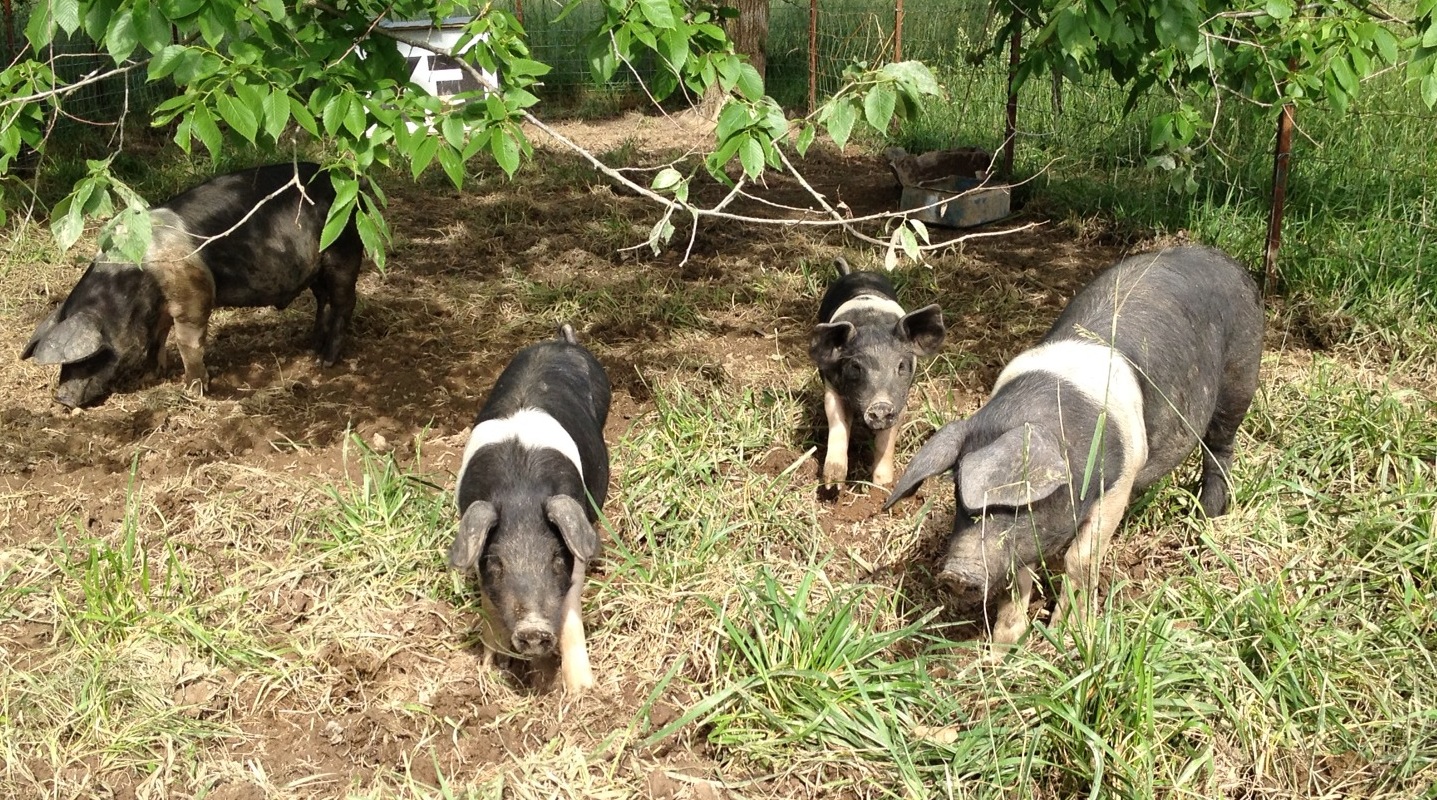
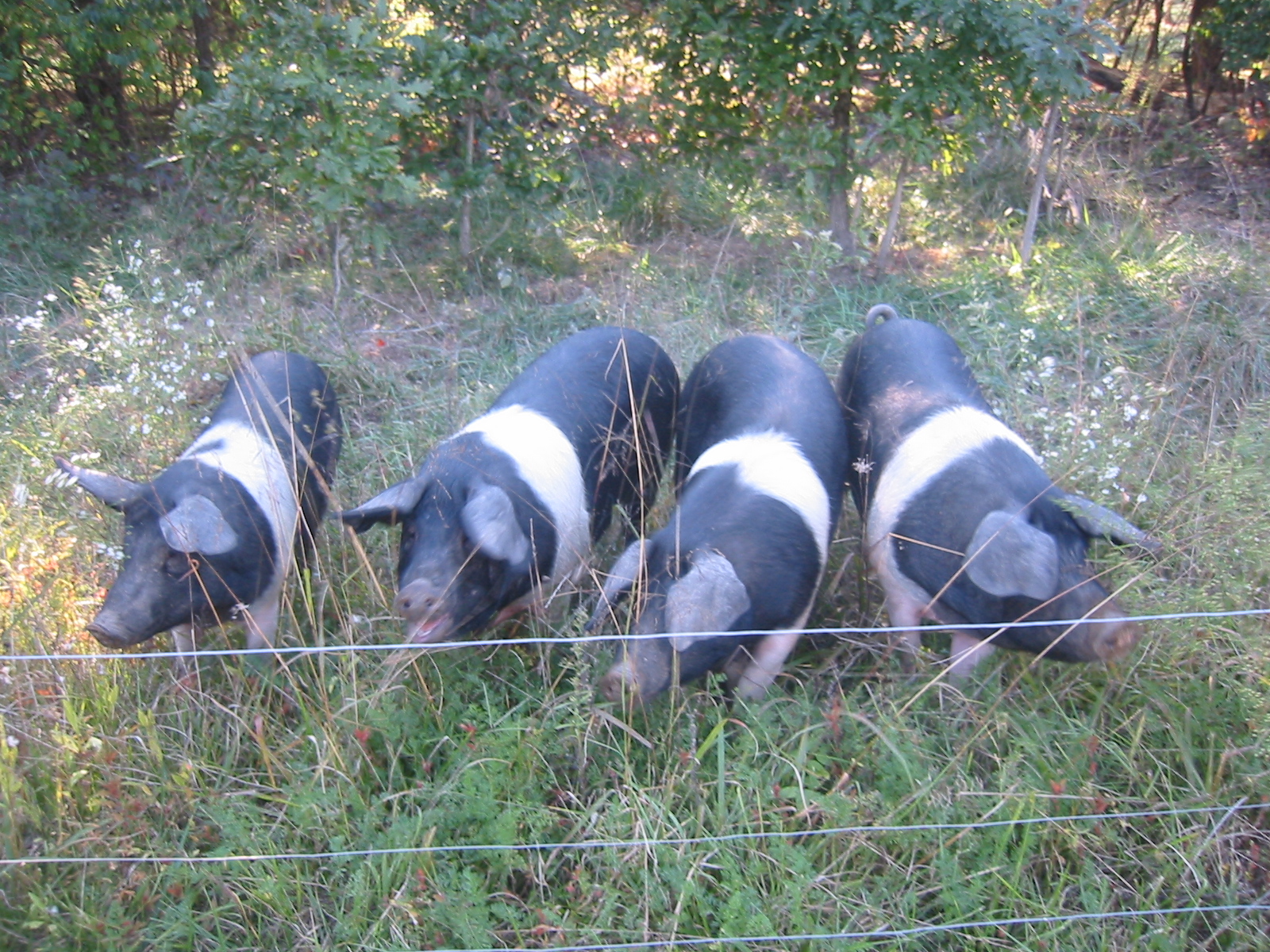
Big A, Princess, Dot, and DT

We came upon this breed by chance.  The farm we bought our American Milking Devons from raised them, and on a tour of the farm, we decided we would get a few when we came back to pick-up our cow/calf pair.  The Wessex Saddlebacks (WS) is not only an old heritage breed, but a rare one.  Almost extinct in their native England, there is a huge effort in Australia and New Zealand to preserve the breed.  There is one farm, Flint Hill Farm, here is Missouri that is one of the few breeders in America.  The WS are a hardy breed of pig.  They do well foraging on pasture and were mainly bred for their excellent bacon and hams.

We decided to get 4 weanlings, 2 gilts (girls) and 2 boars (boys).  With the help of my vet sister-in-law Kathleen, we castrated the boars ourselves, turning them into barrows.  I don’t think we will do that again. One, it is stressful for all involved. Two, I am not sure if it necessary to get rid of the boar taste or “taint” as it is called. The next pigs we get, we will leave them intact and see what happens. Supposedly, raising them on a more pasture based system, which we are working towards, lessens the risk of taint. People with mature breeding boars have butchered with no problems. Third, it is a a lot of stress for me to do post-op care. I was constantly checking to make sure they were healing well. The incisions are pretty well healed up after a week, but a week of fretting over it is too much for me.

IMG_6888
They found something good to eat!

We set the pigs up in a good sized paddock attached to our potbellies pen with a small house for them.  I have never raised pigs before.  Fred has experience with it, but I sort of took over the pigs at the beginning.  I fed and watered them. I scratched them, picked off ticks, monitored their poops, check eyes, ears, and tails to make sure all was well.  A pig with a curly tail and clear eyes is a happy pig. A straight tail and runny eyes means something is wrong.  They got used to the daily checkups easily.  As they got older, I would check them once or twice a week. I talked to them and watched them. I trained them to come when I clapped my hands repeatedly.

Before they grew too big, we moved them into a new pasture with an old pond.  We ran 3 strands of electric wire around a large paddock that had big cedars and a walnut grove.  They loved running about the trees and lounging in the pond.  When there wasn’t much rain, Fred would take buckets of water down to make sure they had mud to cool down in.  And even though it is frowned upon, I named them. Everyone says you shouldn’t name an animal you will eat. I think part of treating them with respect is acknowledging their individua

IMG_6880
Dot, Big A, Princess, and DT

So, there is Dot,
Double Trouble (DT),
A-hole or Big A,
and Princess.

Dot is pretty obvious with the dot on her shoulder. Double Trouble, because he had the black and white double stripe on his shoulders. A-hole, because he is an a-hole to the others; always pushing and shoving. I never thought I would name anything Princess, but she was the first to let me scratch her, loved to be rubbed on and snuggle up to me.

Five months after we brought them home, it was time to butcher. We wanted to do it ourselves.  Well, I wanted to do it ourselves.  Just like with the chickens, I don’t like passing that task off to a stranger.  However, with the new house, chickens left to butcher, fencing to be put up, and family commitments, it just wasn’t going to happen.  After talking to and visiting a couple of processors, we chose one to use. We moved the trailer into the paddock and started feeding them in there.  By the time the day rolled around, they went into the trailer easily.  At the processor, I rubbed on Big A as we waited to unload.  I started to cry a bit.  It’s never easy. But I think if we had done it on the farm, in some way it would have been a bit easier.

I loved having the pigs. And next year we will get more.  And next year we will butcher on the farm, that is for sure.


Filed Under: Our Animals Tagged With: pigs

Carmen and Ernesto, Our Rabbits

Posted on October 8, 2013 Written by Serena 6 Comments

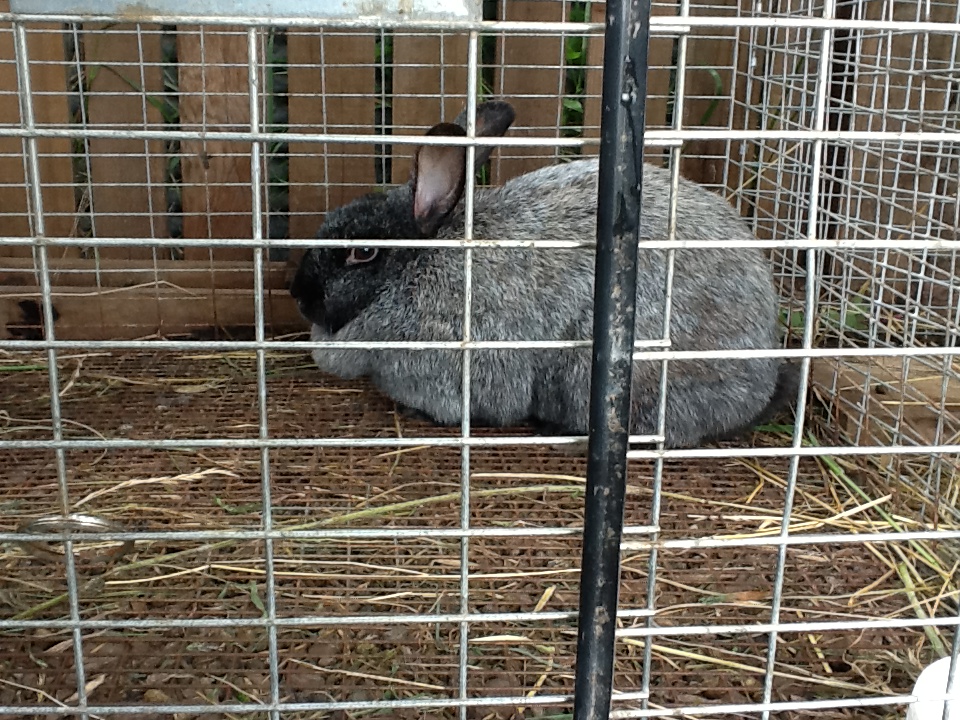
Carmen
Carmen
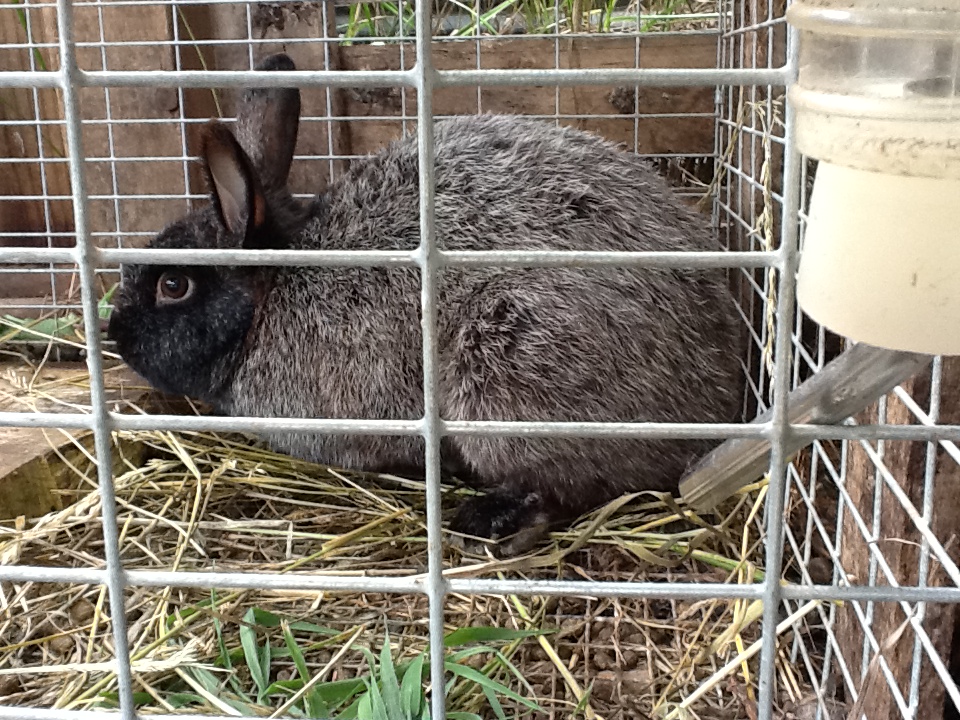
Ernesto
Ernesto

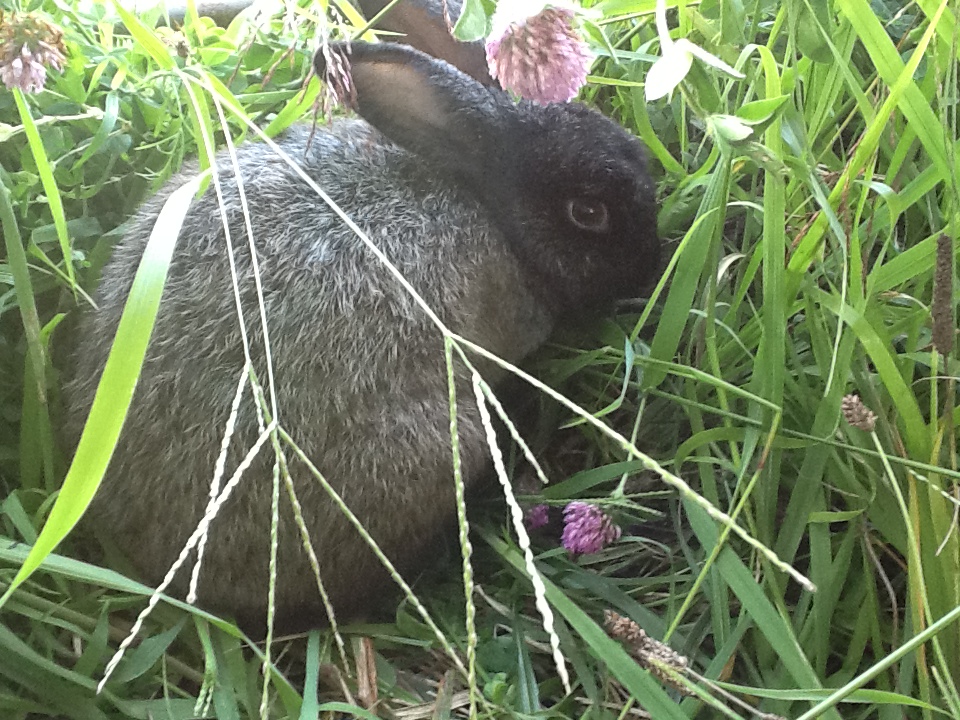
When we picked up our milk cows and pigs, the woman offered us a breeding pair of Silver Fox Rabbits.  When I hesitated to answer, she offer the cages to go with them. How could I pass that up?  I have been talking about getting rabbits for meat and fur for about a year.  I got some hides from our friend’s dad (although I have yet to tan them) and want to use the fur to make different thing.  Gloves, bags, jackets, blankets.  I ate rabbit in France and loved it.  So this seemed like the perfect opportunity.   When I saw them, I knew what to name them…Carmen and Ernesto.

Since we were not planning on having rabbits, we weren’t set up for them.  Luckily, the old goose house wasn’t being used and their cages fit perfectly.  I was sent home with a pack of pellets, so food was taken care of.  Their first morning, I picked a few handfuls of grass and clover for their breakfast and lunch.  By the time dinner had rolled around, I had done a bit of research and found out not to give them clover because it gives them gas and they have no way to pass gas.  UGH!  Apparently, rabbits have a complex digestive system.  Fiber is what they need most.  So grasses and hay.  Lots of stemy stuff helps keep their teeth naturally filed down.  And the idea of a rabbit wreaking havoc on your garden isn’t quite true.  While they will go in and eat around, they don’t usually eat a lot of fruits and veggies because it doesn’t have enough fiber and throws their digestive system into disarray.  Don’t get me wrong, they will eat things they shouldn’t, just like us.  But rabbits in the wild are able to control what they eat and when, and can stave off most digestive issues.  Not so true for domesticated rabbits. Once a rabbit’s gut shuts down, death usually follows quite soon.  Another interesting part of a rabbit’s system is hind gut fermentation.  Since a rabbit’s diet is so high in fiber, sometimes they don’t get all the nutrients out of the plants.   Whatever needs a bit more processing gets diverted to the hind gut, or the cecum.  There it is mixed with lots of good bacteria, yeast, and other organisms that help break it down further into cecotropes.  Cecotropes is a special kind of poop that is nutrient rich, so the rabbit eats it as soon as it is expelled.  Yes, kind of yuck, but also quite ingenious.  So if a rabbit does not get enough fiber to start with, they miss out on a lot of nutrients.

Now, when I feed them it is a mix of grasses, plantains (the broadleaf weed, not the banana like fruit), mint, dandelions, and chicory.  While Carmen was more interested in pellets than fresh food, she figured out what she was missing and now cleans up her food as well as Ernesto does.  Having them on a fresh diet isn’t easy. There are plenty of days you’ll hear me scream, “ARGH! THE RABBITS!” and see me hurriedly picking over the yard.  And now, Carmen turns her nose up to pellets.  When the chickens are out of the tractors, the rabbits go in. I alternate free range days between them and they seem to love being out and about.

Out on the pasture.
Out on the pasture.

The plan is to start breeding these two and have our own rabbit meat, with the added bonus of hides/fur.  But for right now, they are just living the good life.


Filed Under: Our Animals Tagged With: Silver Fox Rabbits

  • « Previous Page
  • 1
  • …
  • 13
  • 14
  • 15
  • 16
  • 17
  • …
  • 19
  • Next Page »

Welcome to Stuart Farm!

We’re Serena and Fred Stuart. While raising healthy and happy animals is our #1 goal, we’re also here to serve you! If you’re looking for help in navigating healthy eating and living, you are in the right place! We’re here to answer your questions and help you feed your family meat and eggs you can feel good about. We share farm stories that gives you a peek into our life, recipes to try, health tips, and more. We hope you enjoy coming along on our farm adventures.

Connect with us

  • View StuartFarmLLC’s profile on Facebook
  • View stuart_farm’s profile on Instagram

Contact Us

573-764-2324 please leave a message .
Farm hours are by appointment only.

Tags

Beef recipes broth chickens delivery Devons Dorkings Eggs Farm Life Freedom Rangers garden lard pigs Pyrs raw diet recipes recipes sweets Silver Fox Rabbits Sugaring

Categories

  • Blog Posts (73)
    • Farm Life (39)
    • Mother Nature (1)
    • Our Animals (24)
    • Our Garden (2)
    • Pigs (5)
    • Projects (1)
    • Recipes (16)

Recent

  • 2025-2026 Our Years of Transition
  • Our Farmstay Is Now Open!
  • The Best Way to Take Charge of Your Health
  • Love is…
  • My Summer Reading List

Archives

Copyright © 2026 · Focus Pro Theme on Genesis Framework · WordPress · Log in

Loading Comments...