Stuart Farm

  • Our Story
  • Shop
    • Our Store
    • Where to Buy
  • Come Enjoy a Farm Stay!
  • Our Classes
  • Fertrell Products
  • Contact Us
  • Blog Posts
    • Our Animals
    • Mother Nature
    • Our Garden
    • Recipes
    • Farm Life
    • Projects
  • Consultation Services
  • 0 items

My Sweet Pee-Wee

Posted on July 14, 2013 Written by Serena 4 Comments

20130714-170420.jpg

When I was a little girl, my dad brought home a cage of quail chicks. I am not sure why he did, but I placed them on my toy shelf and cared for them. There was one that was small and got trampled by the others. I tried to make sure he got enough food and water so he could grow, but one day I checked in on them and he was dead. I was so sad and cried as I buried him in our yard. I felt like I had failed him, that I should have done more. Today I had those same feelings.

Yesterday, I found Pee-Wee on the floor of the coop sleeping.  I thought maybe she had been picked on by the girls so much, she was just trying to stay safe and rest. I picked her up and put her on top of the coop in the shade for a few hours. Later, I moved her into the feed shed. She still didn’t want to do anything but sleep. I gave her some feed, but she couldn’t seem to find the food, pecking at the table. Even the rattle of the can didn’t perk her up. I took her home last night and made some hot oatmeal and she ate a bit. This morning there was no change. I made her drink and eat, but she still wouldn’t stand on her own and now she wouldn’t open her eyes.

I was torn between hoping she would snap out of it and ending her suffering. We had finished up butchering and I went to check in on her and she started flapping around. Before I could open the cage, she stood up tall, gasped, and fell over. I burst into tears as Fred tried to console me.

I have no idea what was wrong. Had she eaten something she shouldn’t have? A disease? But I think Fred’s explanation may be right…her tiny body just wasn’t made to live so long. Pee-Wee was one of the meat birds we saved. They are bred to grow and be butchered, not live a long life. If the hens don’t make weight by the last butchering, we keep them as layers. Pee-Wee was well below butchering weight, like a third of the weight of the others. I am not sure if it was because of her stunted growth, but she also wasn’t quite right in the head.
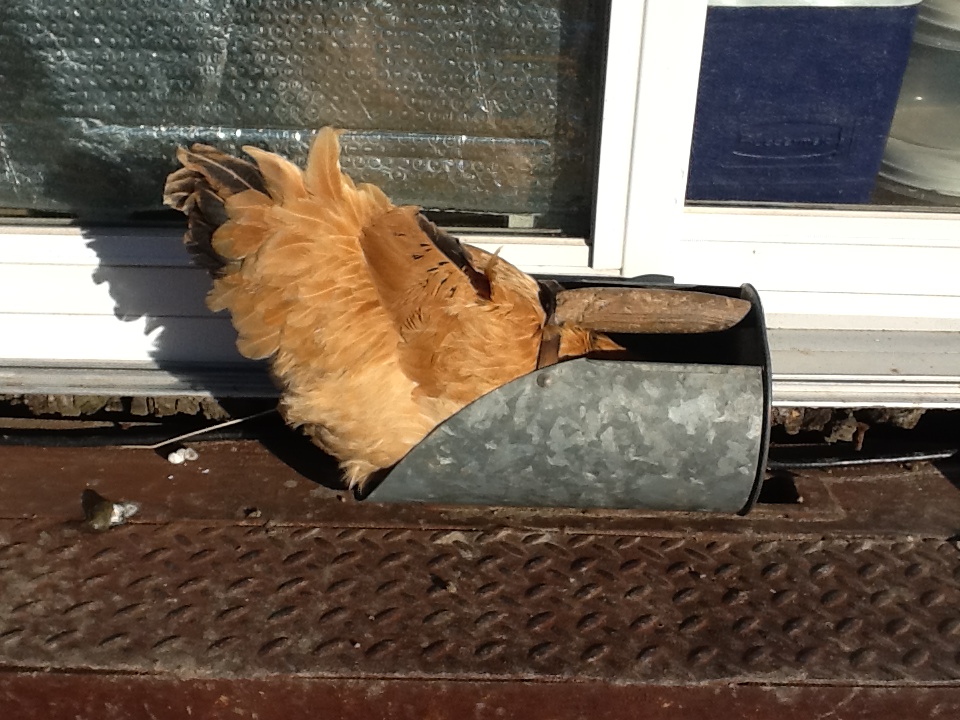
Her peculiar eating style.

She had a thing about eating…she wanted to eat out the bucket or can, not the ground or feeder. Not sure if that is why she never really grew. I heard of chickens having twisted beaks and a hard time eating, so I checked her out. No twist. So when it was time to eat, I would let her eat out of the can. When she was with the layers, I couldn’t put the can by the ground without everyone else trying to eat, so Pee-Wee started to jump on my lap to eat. Then she started to climb up my leg as soon as she saw the can. Our routine was for the other girls to get fed, then I would slap my knee, she would fly up to my bent knee, and I would put my arm under her for her to roost on while she ate. If I couldn’t do this with her, she would just walk around the food confused as to what to do. She would peck a bit, but not like the others.
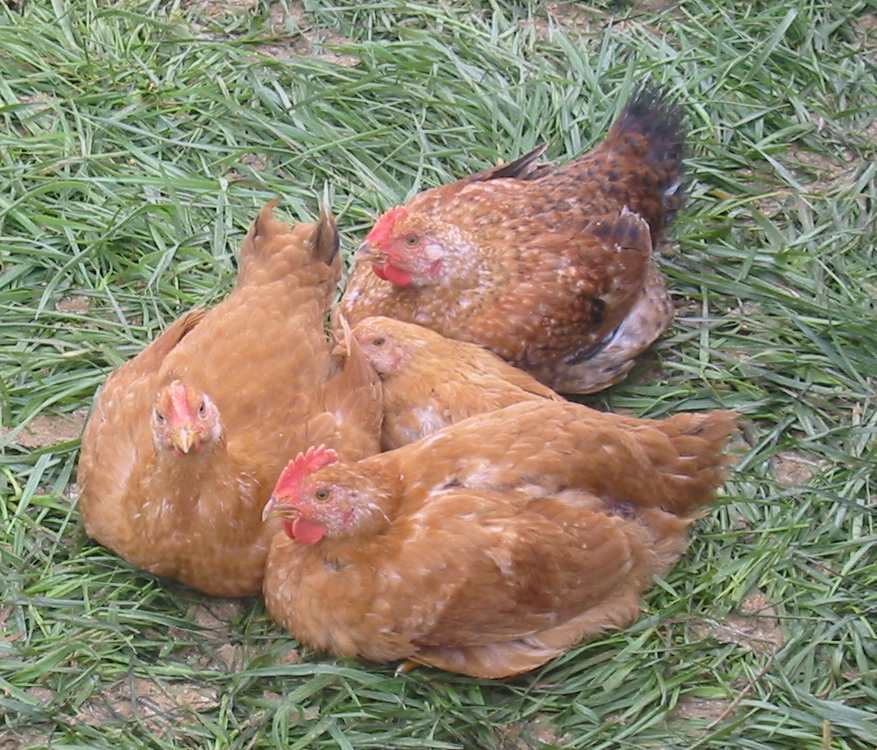
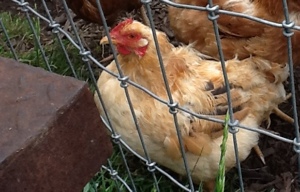
Pee-Wee with her security team.

She was a sweet chicken; always wanting to be with me. When they were out roaming the farm, she’d be in my business, under foot, trying to get some love. When they moved into the chicken oasis, she would squeeze under the gate to come sit with me.  It’s like she didn’t know she was a chicken. And when she got mad at me, she would let me know. Many a time did she walk right up to me, hop on my lap, peck me hard, jump off, and walk away. I would make it up to her with a little extra wheat at the end of the day and she would sit on my lap and snuggle. Her fellow meat birds didn’t pick on her, quite the opposite. The above picture was typical of how she would spend her days…surrounded by 3 birds. Never once did I see them pick on her, it was like they knew she was different.

The hard thing with chickens is that when they are sick, by the time they show signs, it’s usually too late.  I know she had a good life, but the feeling that I failed her is still there.  I guess it’s a good thing it hurts my heart so much.  It confirms that I haven’t lost compassion for my animals. I think if the day comes that I am not saddened by the death of my animals (either accident or planned), that will be the day I will no longer keep them.   For all the special treats and treatment Pee-Wee had in her life, and there were A LOT, she gave me a great year of companionship. Thank you, my sweet Pee-Wee.
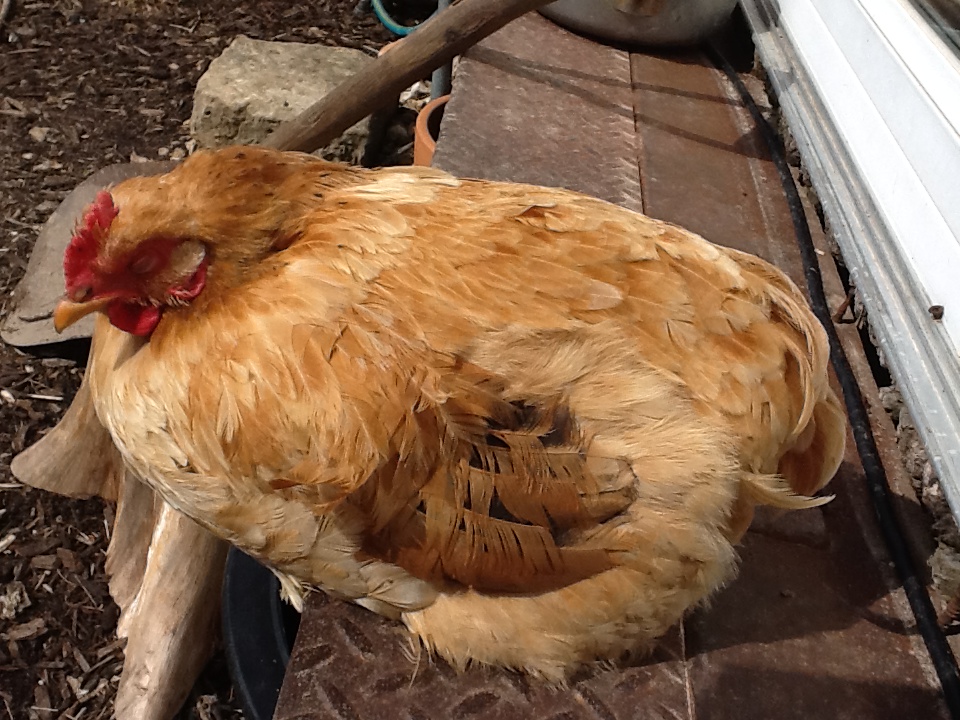
Sleeping Angel

Filed Under: Our Animals Tagged With: chickens

A broody hen

Posted on June 6, 2013 Written by Serena 6 Comments

20130604-204027.jpg
Day one…

As I sat watching Neckless fuss over her eggs, it was easy to let everything else leave my mind and focus on the beauty of what I was witness to. Most breeds have had the broodiness bred out of them. None of our Leghorns or Rhode Island Reds have shown the least bit of broodiness, but here was a Freedom Ranger, digging down deep into her DNA to do what she was meant to do.

20130604-202710.jpg
And we wait…

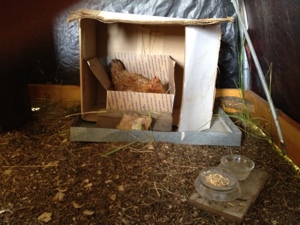
A broody hen is something I have wanted for some time now. But for some reason, when I saw she was broody, all I could think of was how to break the habit. Then Fred reminded me that I WANTED a broody hen. So off I went to create the perfect broody box for her. After a bit of reading and asking around, I decided to get her out of the nest box and into a space she could be undisturbed. I found a cardboard box that would hold the nest and another I would put the first in for some extra privacy. I set Neckless up in a corner of our brooder house with her own hospital tray of feed and water. She is expecting after all!

And there she sat. Every other day, I would make sure she got off the nest, stretched her legs, and ate and drank. On hot days, I would leave her to have some extra time off the nest, but would check in to make sure she did get back on. What I had read most was to make sure they eat and drink, as they will stay on the nest neglecting their needs. Since they won’t get off, even to poop, I would check to make sure she pooped when off the nest. And after holding in a day of feed, she would expel some huge rank poops that were immediately toss out the brooder for fear of succumbing to the smell.

Neckless was a good broody. Left alone, she would get back on the nest. I loved watching her arrange the eggs under her. I loved watching her walk around and start to come out of her trance, shaking her head, ruffling and preening her feathers. After 20 days of her sitting and me fussing, it was time.

While I did chores for the other 100 chicks in the brooder house, I heard Neckless clucking and cooing. It was different than her regular “stop making noise and annoying me” cluck she usually gave me. So I HAD to find out if anyone had hatched. I tried to lure her out with food, but she wouldn’t come. So I carefully lifted her up and saw a little chick that must have just hatched since it was trying to stand. I didn’t want to upset anything, so I placed her gently back down and she started her cooing again.

20130604-205526.jpg
Finally!!!

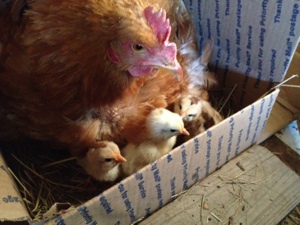
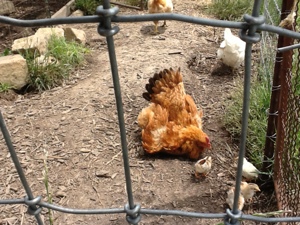
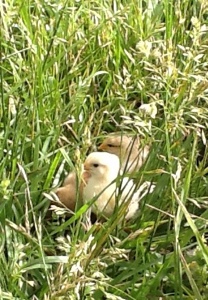
As of right now, I have seen over 500 day old chicks. But this…this was breathtaking and amazing. I couldn’t help but run out to find Fred and tell him the news. And truth be told, I was a bit teary eyed. Neckless sat for 20 days warming and turning these eggs, clucking to them, and knowing just when to stop fussing over them and let them hatch. With one hatched, she knew just how long to keep sitting for the others to hatch. And when they went past their time, she stopped sitting. Out of 7 eggs, 1 broke early on, 4 hatched, and 2 duds. The day after the first hatch, 3 others joined the family. The first chick hung out under Neckless’ wing while the others hatched down below. Then everyone snuggled down under momma for the day. On day 3, they were ready to get out and explore!

20130604-203343.jpg
Momma calls for dinner and everyone is hungry.

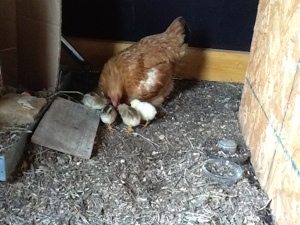
I cut the nest box open so the chicks could get in and out easily and added a ramp. With momma watching over, the little ones started to explore. Soon, Neckless was making all kinds of sounds I had never heard. There was the call to come back to her. The call that there was food. The call to pay attention. Neckless would scratch and peck and drink, and the chicks would do the same. I ground up some wheat and sprinkled it about for them to find. When I first did this, I could have sworn Neckless gave me a look like “Why are you spoiling them?! They have to work for their food!”

20130604-203627.jpg
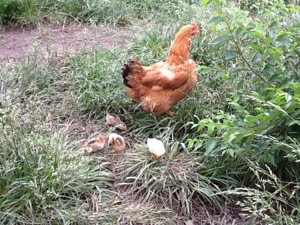
First day out on the pasture.

It is interesting to watch Neckless teach the chicks all they are supposed to know and do. Like taking a dust bath, which plants to eat, and how to scratch around. And it is interesting to see the chicks different personalities. The all white one is the leader and most adventurous, and the lighter brown one is always getting left behind.

20130604-203722.jpg
Lesson number 3…how to bathe.

Only one of the White Leghorn eggs hatched. The others were from Rhode Island Reds or Freedom Rangers. It will be interesting to see how they mix with Ron Rico, the Silver Dorking. All chicks have the Dorkings extra toe, but I will have to wait to see who gets the Dorkings short leggedness.

20130604-203953.jpg
Looking for momma.

I doubt any of the other girls will go broody. I do hope that Neckless does again. If she does, I am going to put a lot more eggs under her. I don’t think I could ever tire of watching something so incredible.


Filed Under: Our Animals Tagged With: chickens

Our Freedom Ranger Chicks

Posted on May 7, 2013 Written by Serena 2 Comments

We started raising Freedom Rangers in 2011. We both have experience with Cornish Cross chickens, what you buy in the grocery store, and while the meat was good, the way the chickens behave was not what we wanted. The Cornish Crosses are bred to grow fast and big. In 6-7 weeks you can butcher and have a 4-5 lb dressed bird. They don’t range very well and tend to sit at the food tray and eat. Sitting as much as they do, they tend to have missing feathers on their breasts. They also tend to have legs problems because of the rapid growth rate. They just don’t look like something we would want to eat, so we searched until we found a better meat bird for us.

The Freedom Rangers take an extra 2-3 weeks to get to weight and like to range. They do well in the tractor and electric netting set up we have.  We get rave reviews from our customers on the taste of the Freedom Rangers, so we stick with them.

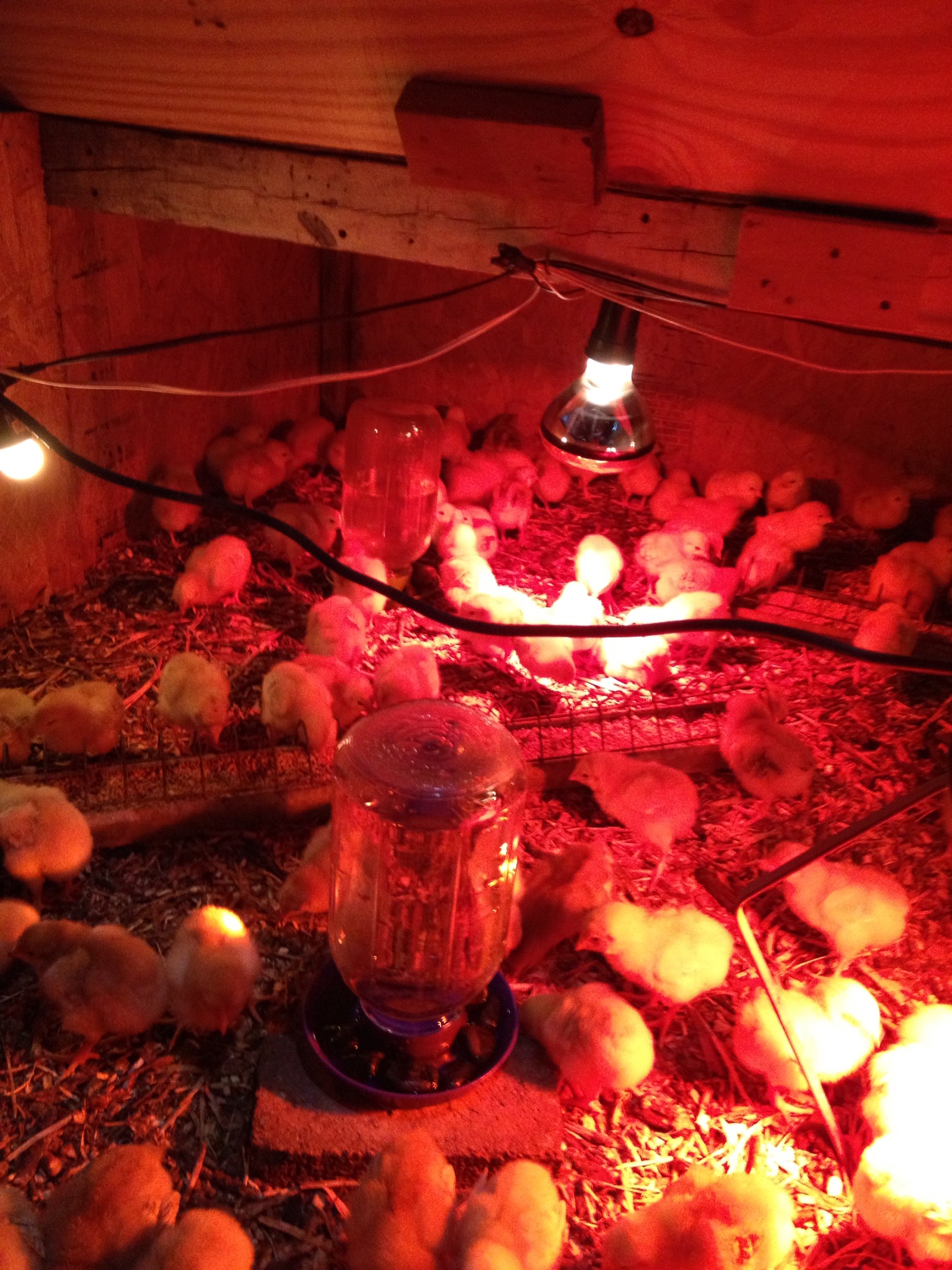
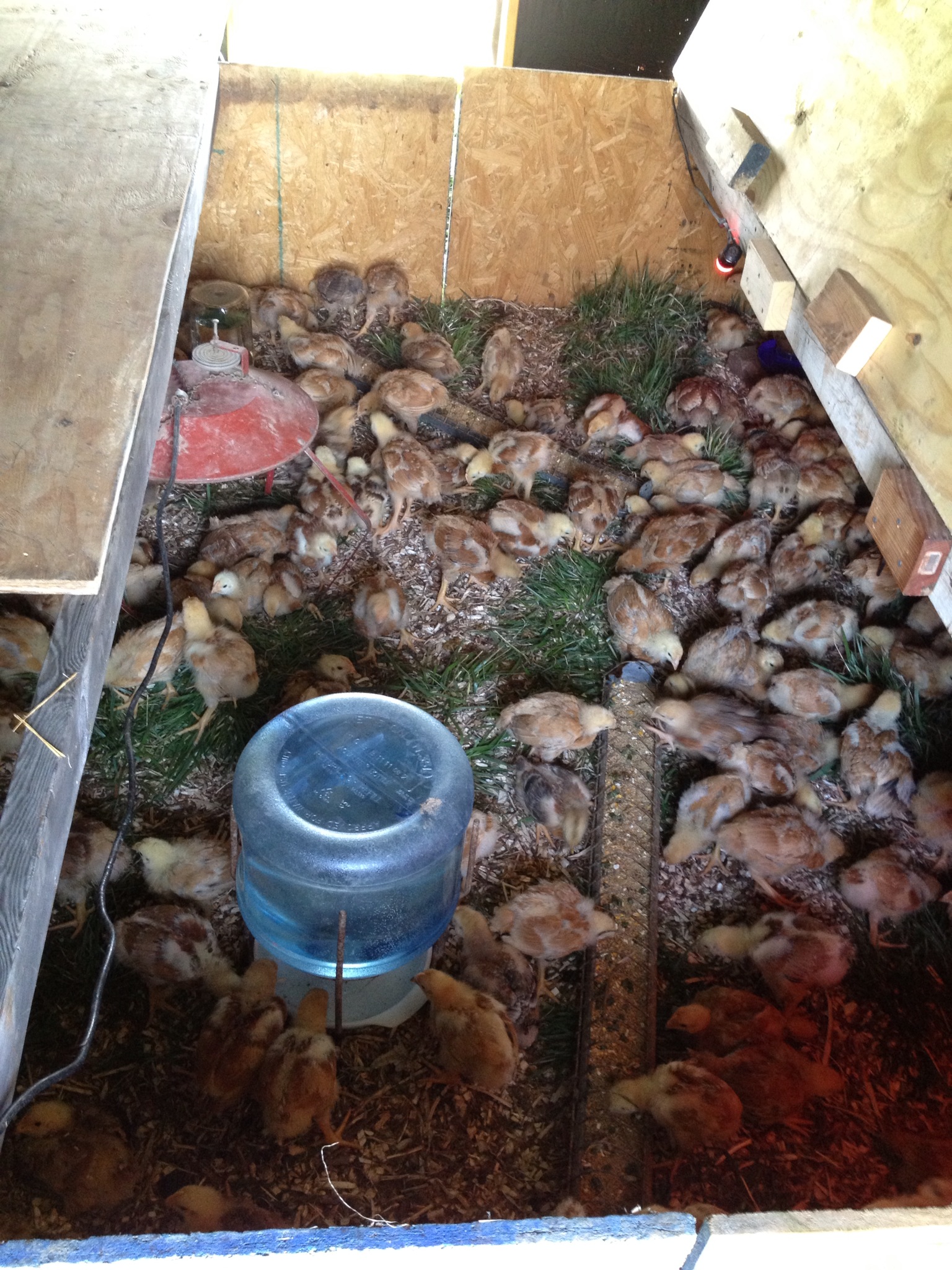
First day in the brooder.

We get our day old chicks and into the brooder they go. We raised a few batches on dried grass clipping bedding and then switched to the deep litter method. We pile about 6 inches of mulch and wood chips into the brooder and instead of changing out the bedding, we simply rake to turn over the soiled areas, adding more mulch/chips as needed. Using this method gives the young chicks a good foothold, making sure their legs grow properly, and encourages scratching and foraging. The added benefits of this method are it begins to compost and creates heat and it encourages insects and worms to live in the bedding, giving the chicks something extra to eat. And it always provides interesting sticks, leaves, and goodies for the chicks to play “keep away” with.

Throughout their life, their water has homemade vinegar in it to help with coccidiosis, since we do not medicate any of our birds.  They are fed a special feed blend with mineral supplements twice a day, and once they are older, constant access to pasture.  Our feed ration is a blend of wheat, corn, soybean meal, fish meal, aragonite (calcium), and Fertrell’s NutriBalancer minerals.  We ferment the grains for  28 hours and top dress with the powdered feeds.  We start the chicks out on fermented feed and have noticed the brooder does not smell nearly as bad as before, and the poops are solid with no grains present.

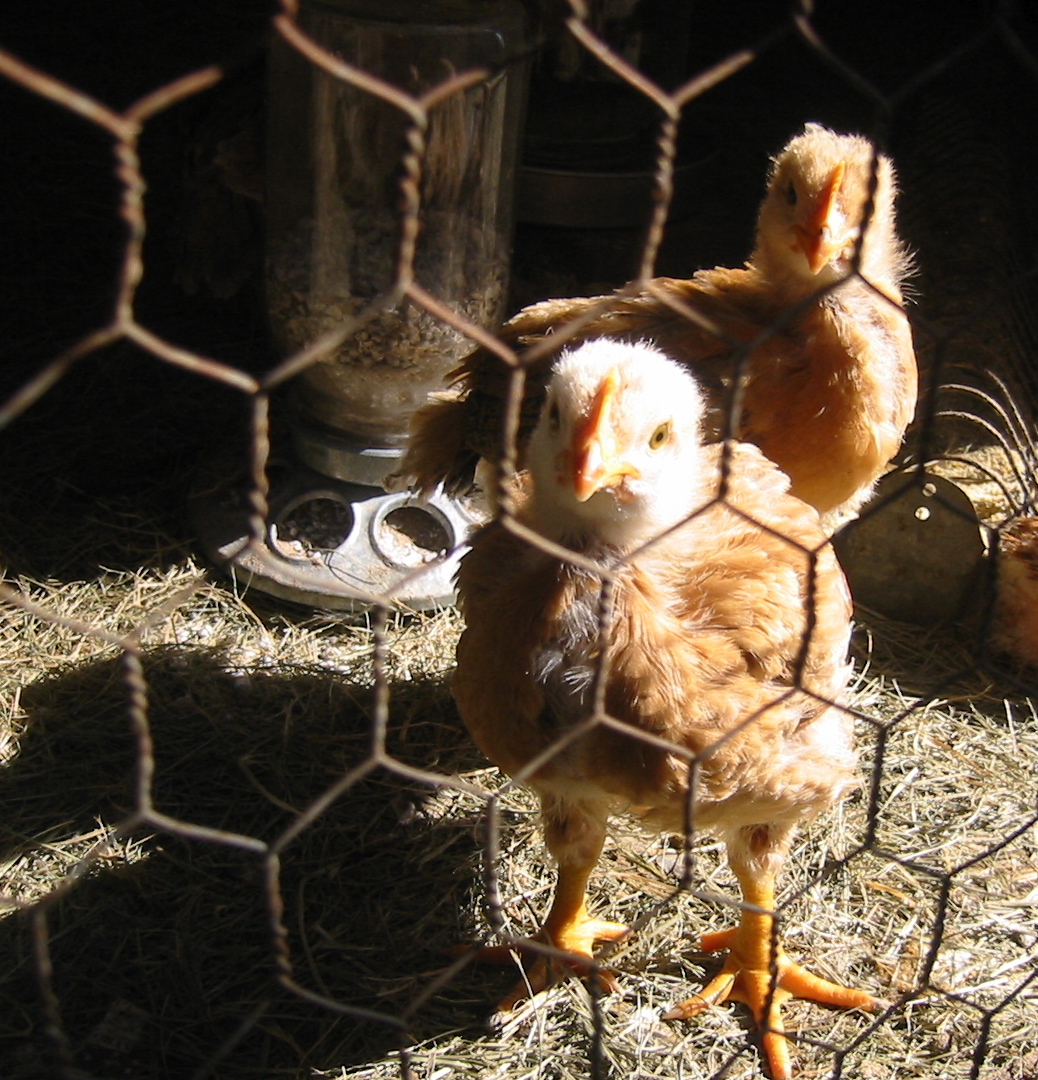
In the outside brooder.


Out on the pasture.

Once the chicks are just about feathered out and they can maintain their own temperature without the aid of a heat lamp, they are moved outside into the moveable tractor.

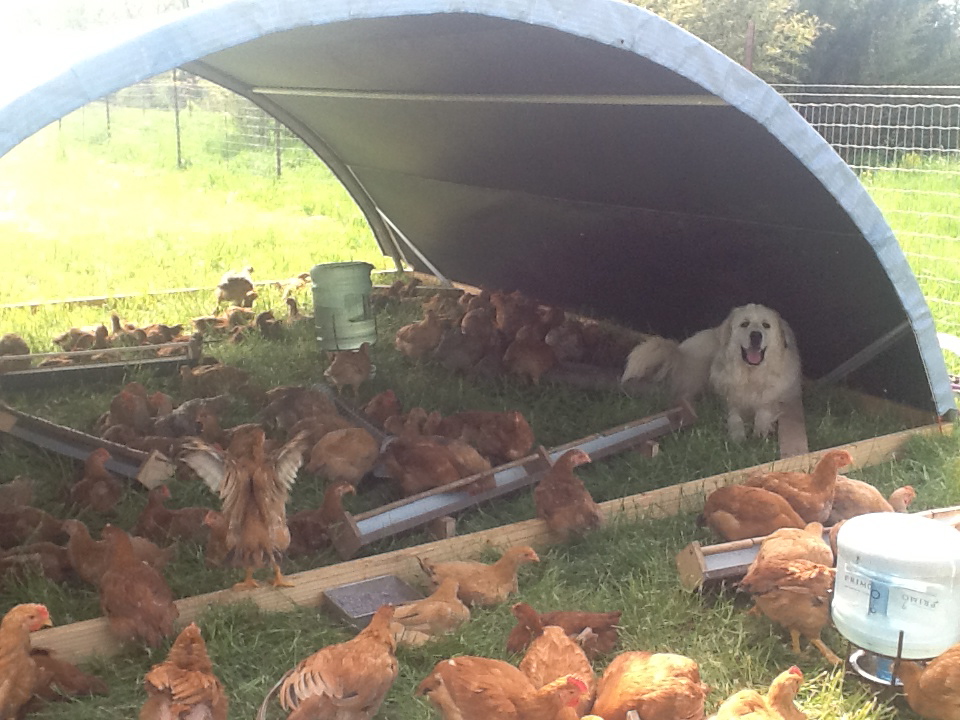
7 weeks old and Maxie gets to have some unsupervised protection time with them.

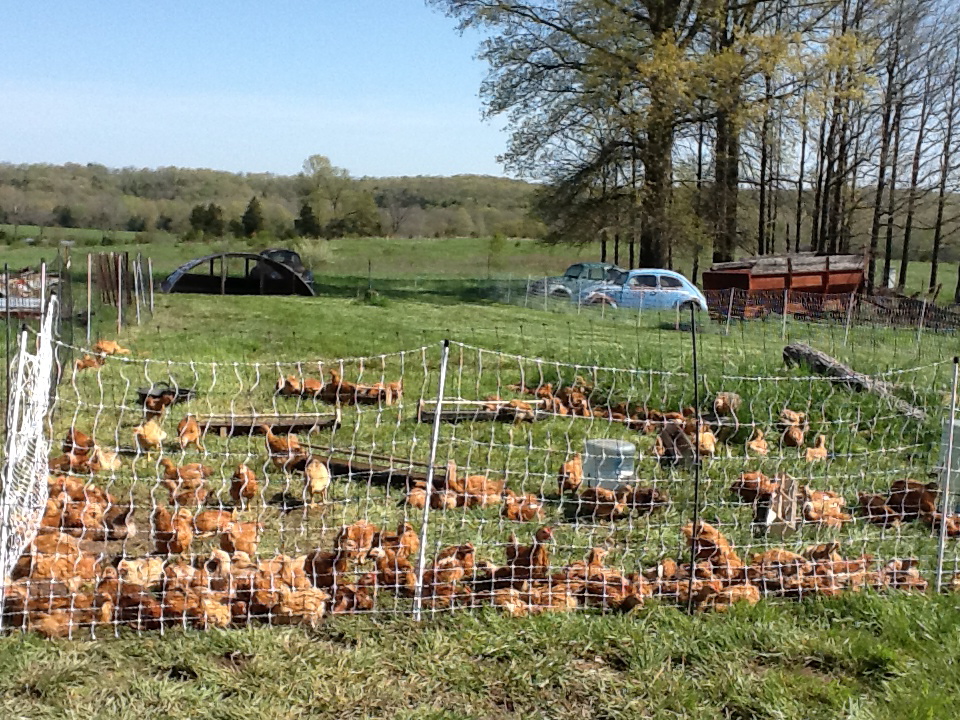
The tractor gets moved around our pastures inside an electric netting fence. The tractor is moved during morning and evening chores to make sure they have a clean space to eat during the day and roost at night.  At about 4-5 weeks, you can start to tell the roosters from the hens. The roosters will start to have staring contests which lead to fights and the hens are noticeably smaller.  At this point, we separate the roosters from the hens to keep the hens from being mounted and scratched up.

Each batch we have raised has been different. One batch will stay out and forage most of the day, others will hang in and around the tractor more. Some can’t wait to see you and come running to hang out, others couldn’t care less if you are there, much less if I am singing to them.  Some are messy eaters and need the feeders cleaned out 4 times a day.  It’s interesting to see all the different personalities in a group.  The rooster that is always picking fights, the runt who won’t back down, the groups of hens that sit in the corners or along the fence.

For anyone wanting to raise their own meat birds, we would highly recommend Freedom Rangers.

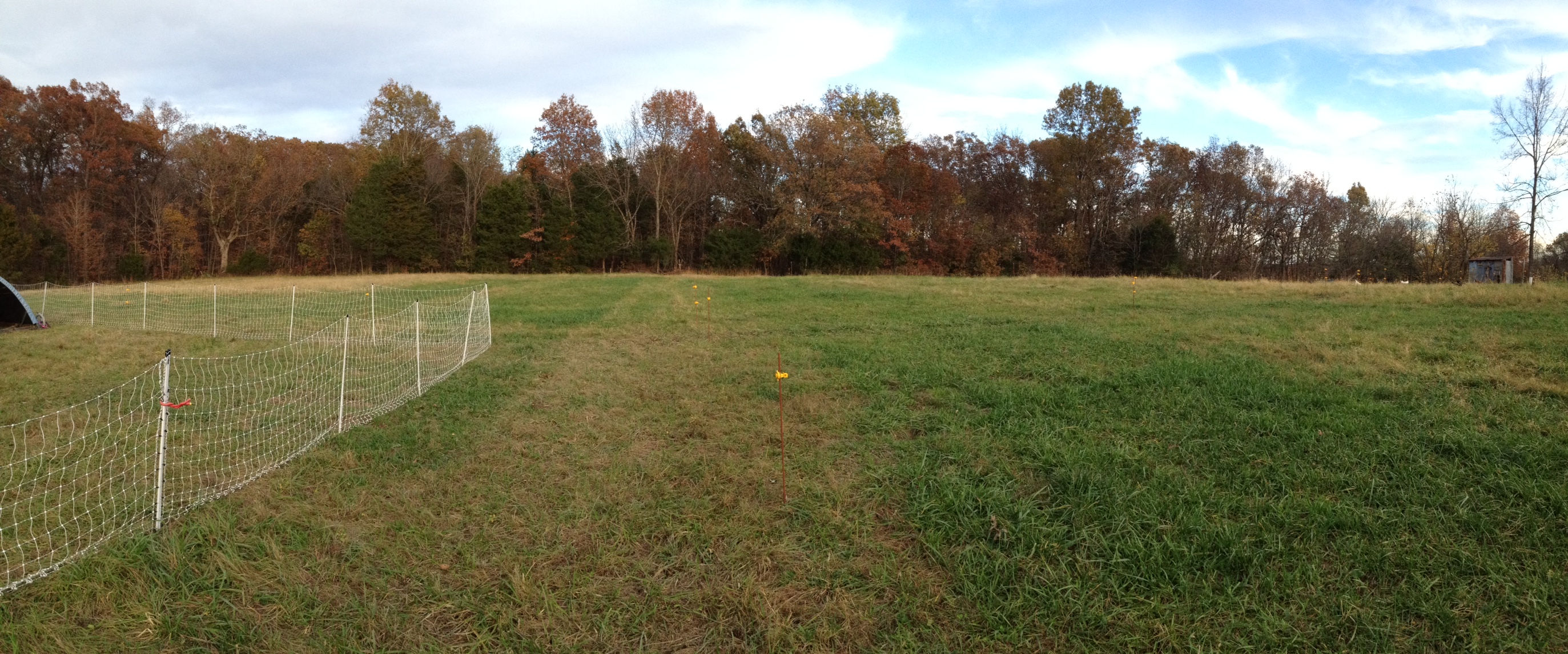
Green strips of fertilized pasture.

Filed Under: Our Animals Tagged With: Freedom Rangers

Tres Leche Cake

Posted on May 7, 2013 Written by Serena 1 Comment

I was very lucky to have my sister and 2 godsons come visit recently. And lucky for her, it was her birthday. Her only request was this cake. She had made it for Kees’ birthday and he declared it the best cake ever. When she told him it was my recipe and I made it even better, he was skeptical.  So this was the test to see who made the best tres leche cake.  After the first bite, mine was proclaimed the BEST cake.

I don’t quite remember when I first had this cake, but I fell in love with it. Well, I fell in love with the first one I had and then started to use this recipe which was just as good. Almost every one I have had since has not been as good as this recipe. When I lived in Hawaii, this was the cake my and my sister’s co-workers wanted for parties. The problem is people think you can just pour a bunch of milk on any ol’ cake and it will work. It doesn’t. They also think you can just top it with anything and it will be fine. It won’t. Then they think they can “fancy” it up with lime or pineapple flavoring. You can’t.
And when someone says, “a soggy cake?!” in disgust, tell them they are right and they should not eat ANY of it. Then have a second helping for yourself.

Tres Leche Cake
makes one cake, approx. 8 servings.

for the cake
1 Cup Sugar, divided
5 egg yolks–room temp.
5 egg whites–room temp.
1/3 Cup whole milk
1 teaspoon pure Vanilla extract
1 Cup flour
1 1/2 teaspoons baking powder

for the soaking mixture
1 can sweetened condensed milk (14 oz)
1 can evaporated milk (12 oz)
1/4 Cup heavy whipping cream (buy a pint of this as you will use the rest on the icing)
1 teaspoon pure vanilla extract (see the note in “Tips” below)

for icing
1/4 Cup powdered sugar, adding 2 tbsp more at a time to your taste.
1 3/4 Cup heavy whipping cream

strawberries, cut in slices to garnish the top
——————————-

Preheat oven to 350 F. Butter and flour bottom of a 9-inch springform pan or cut a sheet of parchment paper to fit.

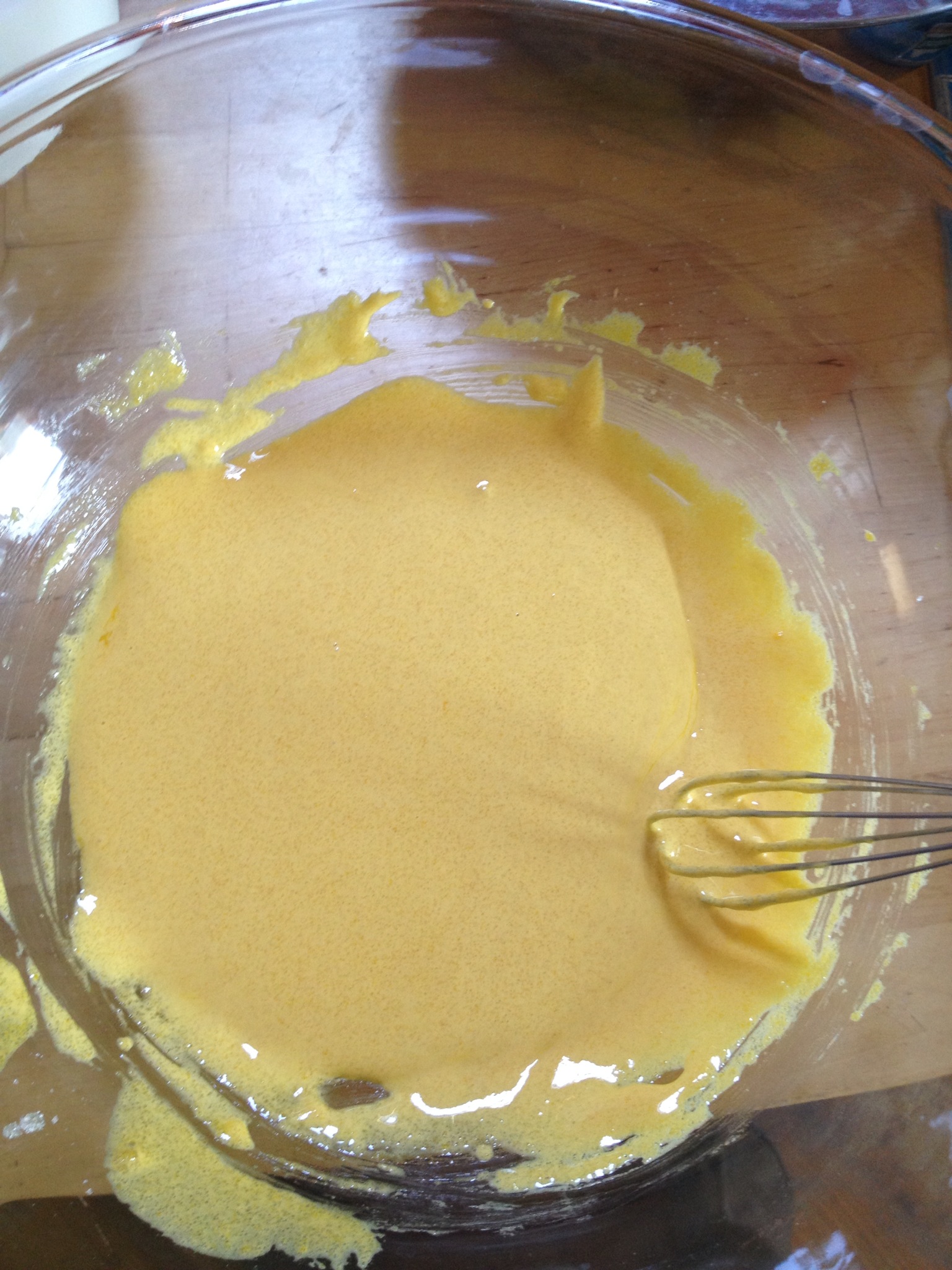
yolks and sugar mix


Beat 5 egg yolks with 3/4 cup of sugar until light in color and double in volume.

Stir in 1/3 cup whole milk, 1 teaspoon vanilla,  1 cup flour, 1 1/2 teaspoon baking powder.


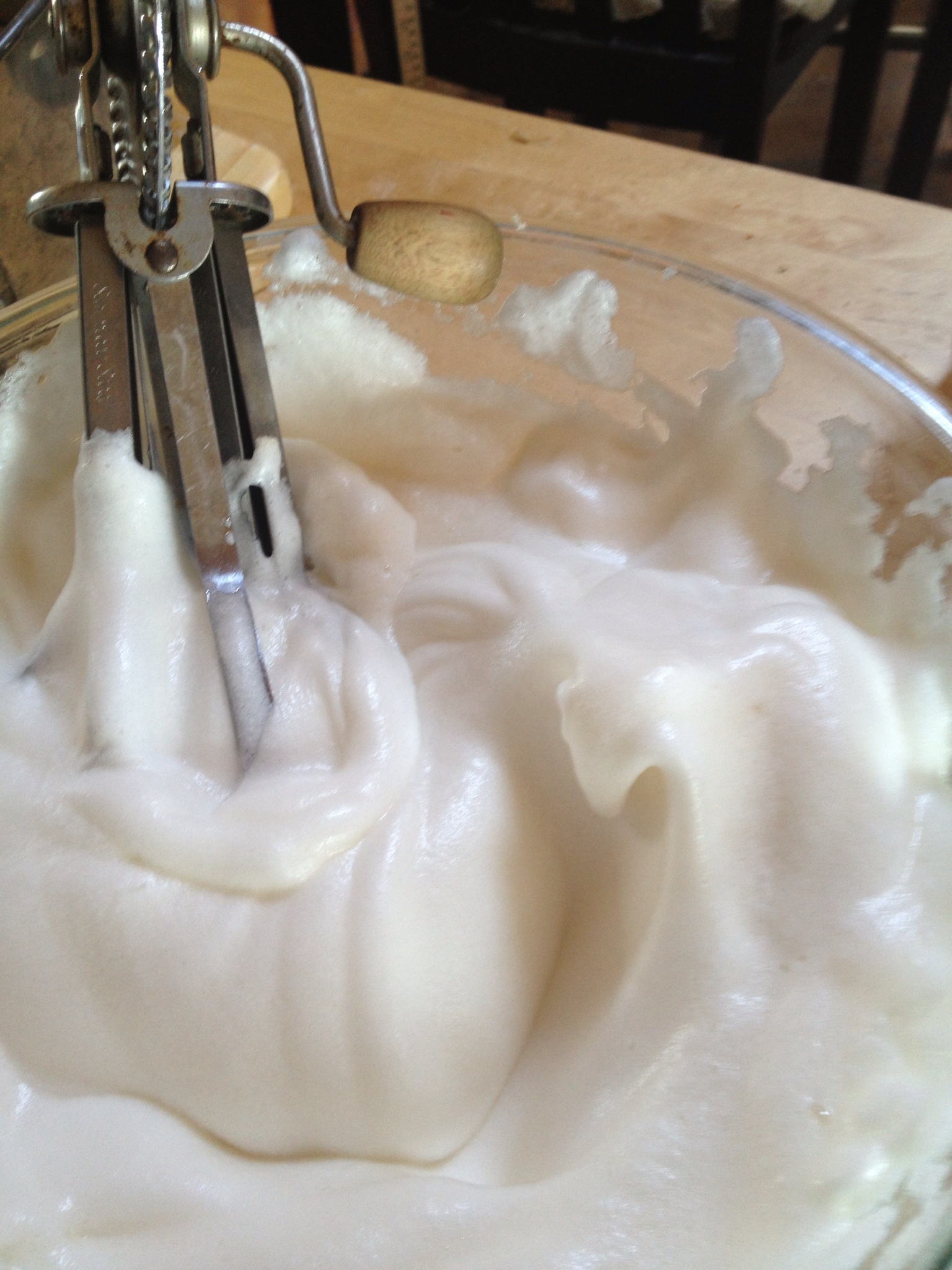
Soft Peaks


In a small bowl beat 5 egg whites until they form soft peaks.


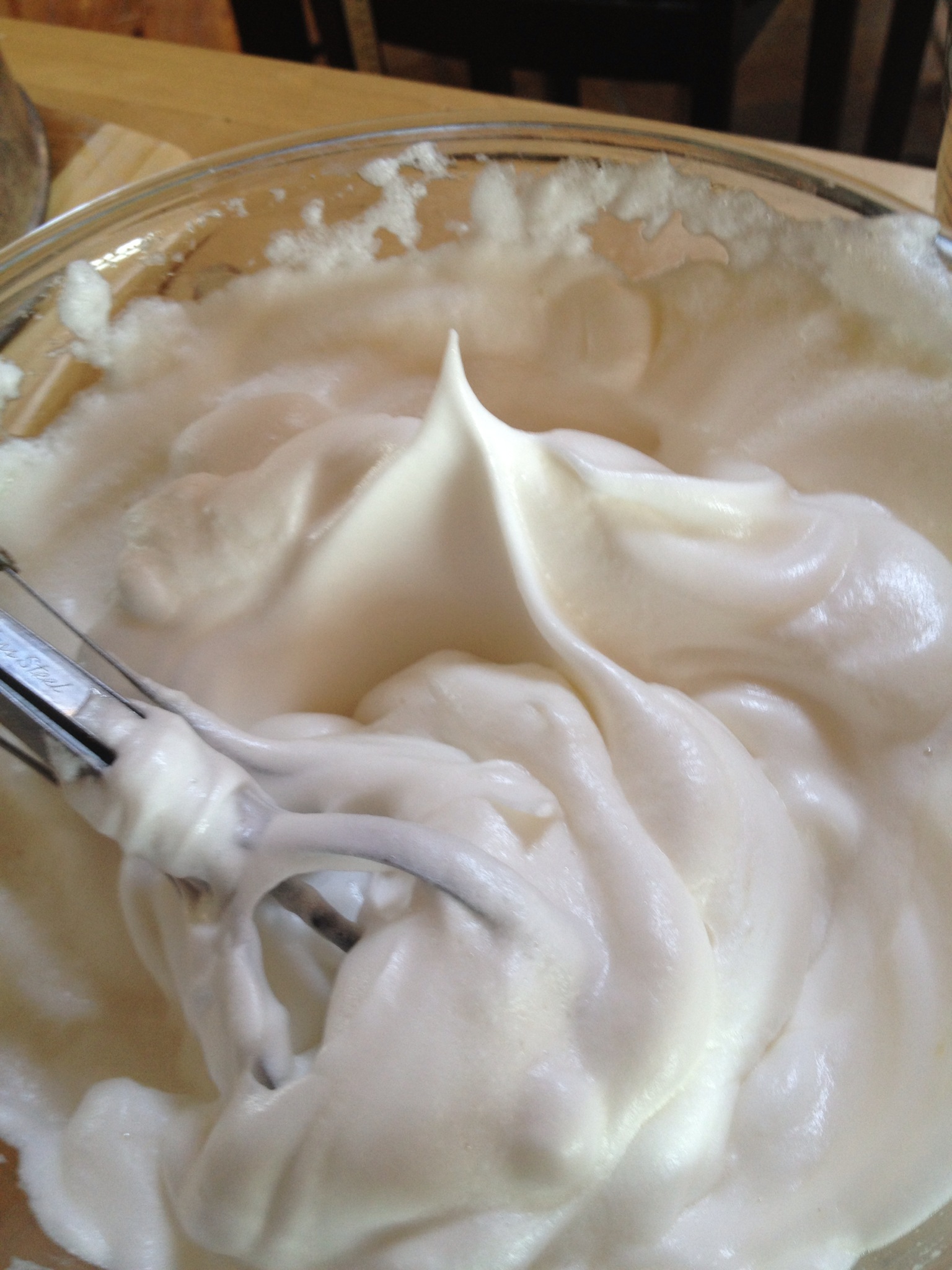
Stiff Peaks
Stiff Peaks


Gradually add in remaining 1/4 cup sugar. Beat until stiff peaks form with shine, but not dry.


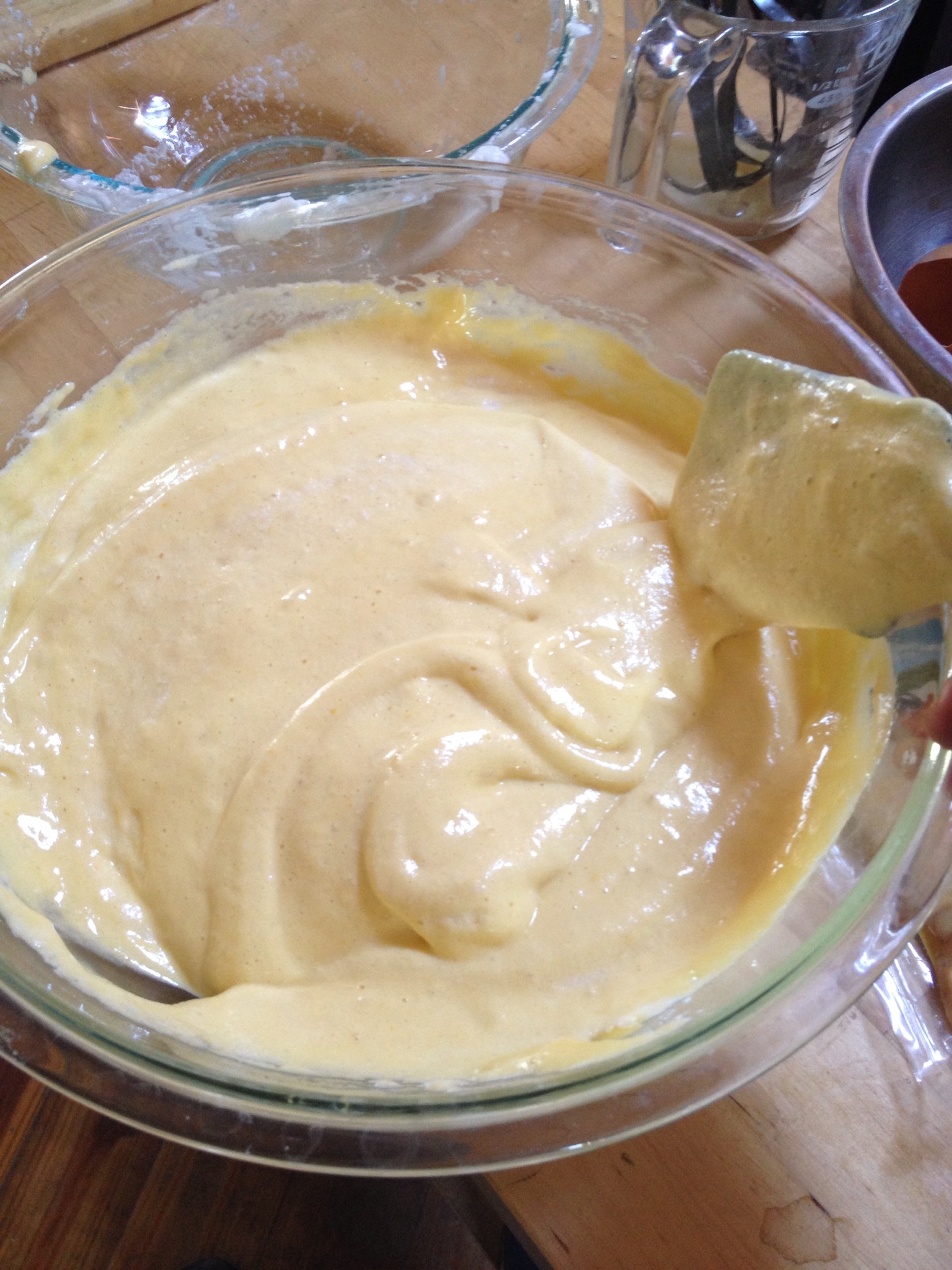
Yolk and white mixtures folded together


Fold 1/3 of the egg whites into egg yolk mixture until incorporated, then add the rest 1/3 at a time.


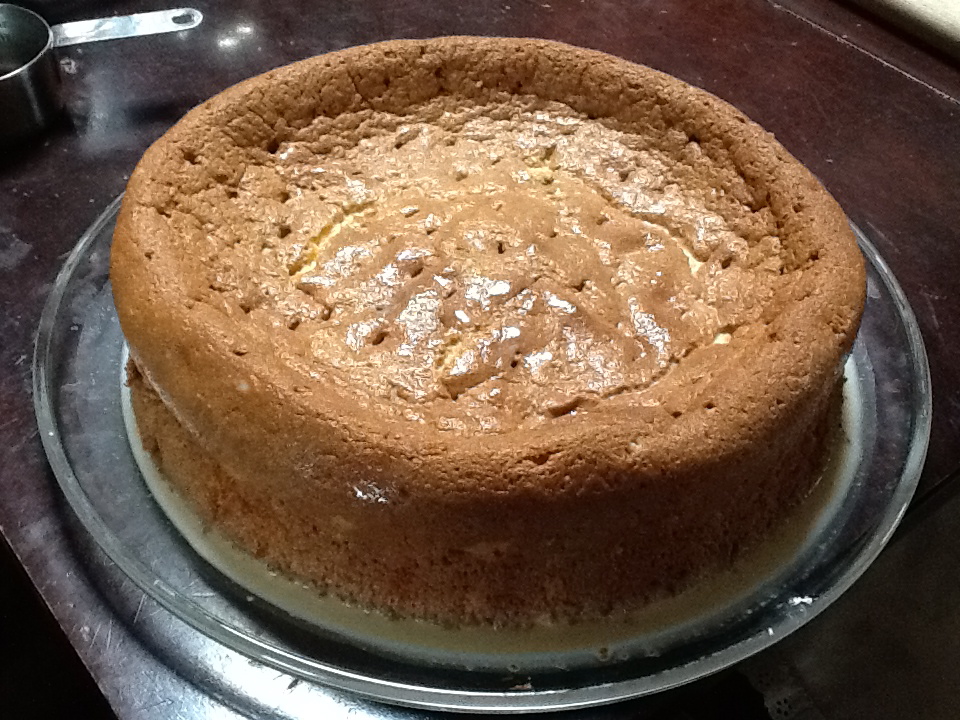
Pour into prepared pan. Bake for 45-50 minutes, or until cake tester inserted in the middle comes out clean.

Cool 10 Minutes. Loosen edge of cake with a knife before removing sides of the pan. Cool cake completely.

Just out of the oven

Place cake on a deep serving plate. Using a two-prong meat fork, chop-stick, or anything that will make a similar size hole, pierce entire surface of the cake.

Mix 1 can sweetened condensed milk, 1 can evaporated milk, 1/4 cup of heavy whipping cream, and 1 teaspoon vanilla extract.

Measure 1 cup of the milk mixture, pour over the cake, and refrigerate for 1-2 hours. Pour remaining milk mixture over cake, and refrigerate another 2 hours, or overnight.

Holes poked and soaking up the milk mixture

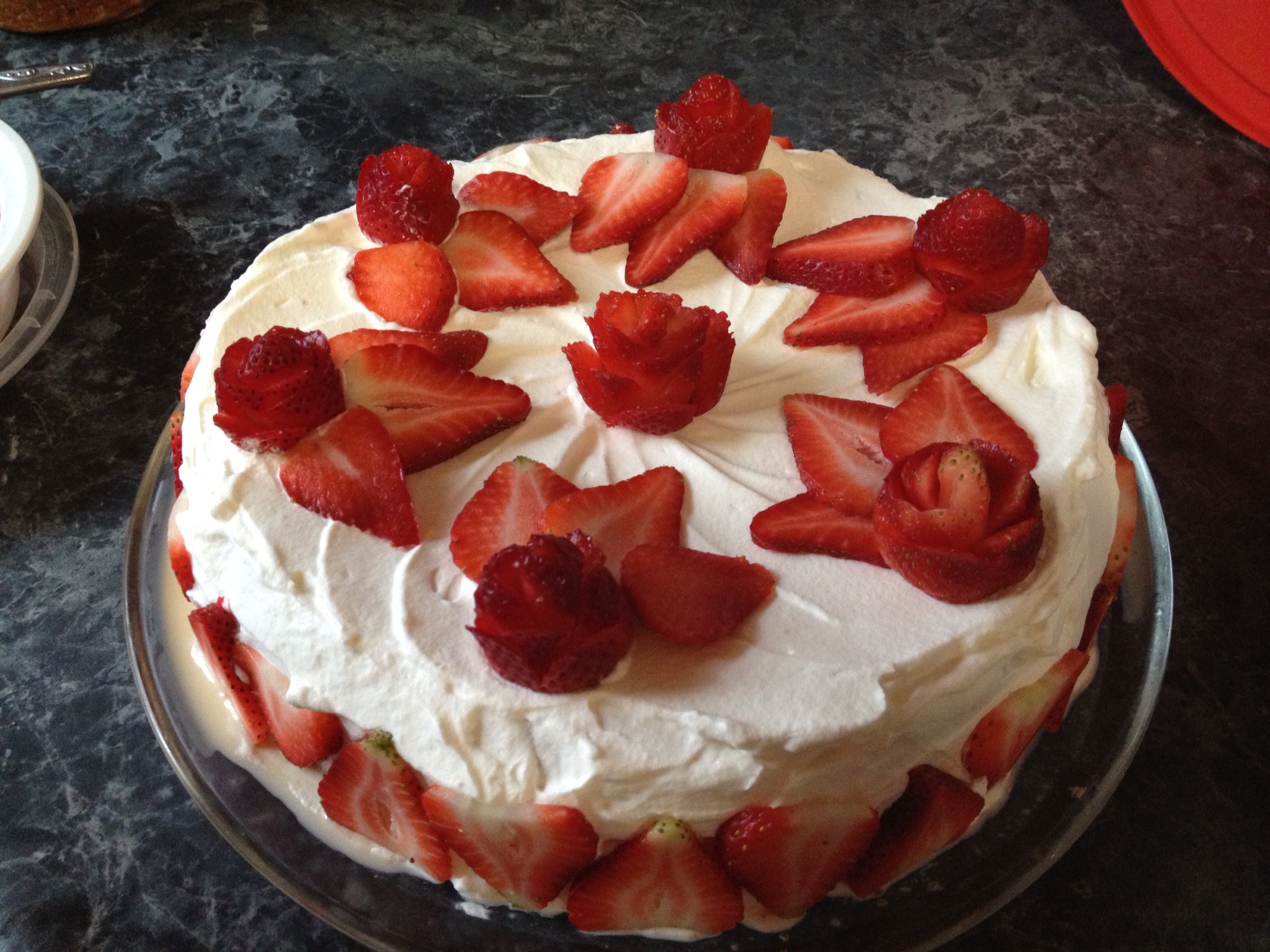
Mix heavy whipping cream adding in the powdered sugar to your desired sweetness. Whip mixture until it forms stiff peaks and is spreadable. Frost cake with mixture and garnish with strawberries.

Keep cake and leftovers refrigerated.

Tips:

Use glass or ceramic mixing bowls that are dry. When beating egg whites, this helps them form better and stay light.

I always use a springform pan, so I am not sure how a regular cake pan would work.

You can substitute low-fat for the whole fat milk products, but they don’t really take that much fat out. I have never tried this, so I am not sure how it would change the results.

You can use rum in the milk mixture instead of vanilla extract. The alcohol in the rum is not cooked out of the final product. Only use rum if it will be eaten by adults who drink.

You want to be gentle with this batter. The egg whites prepared separately give it the lightness it needs to soak up the milks and not be too dense. If you are unsure of your folding techniques, watch this video:

Filed Under: Recipes Tagged With: recipes sweets

  • « Previous Page
  • 1
  • …
  • 14
  • 15
  • 16
  • 17
  • 18
  • 19
  • Next Page »

Welcome to Stuart Farm!

We’re Serena and Fred Stuart. While raising healthy and happy animals is our #1 goal, we’re also here to serve you! If you’re looking for help in navigating healthy eating and living, you are in the right place! We’re here to answer your questions and help you feed your family meat and eggs you can feel good about. We share farm stories that gives you a peek into our life, recipes to try, health tips, and more. We hope you enjoy coming along on our farm adventures.

Connect with us

  • View StuartFarmLLC’s profile on Facebook
  • View stuart_farm’s profile on Instagram

Contact Us

573-764-2324 please leave a message .
Farm hours are by appointment only.

Tags

Beef recipes broth chickens delivery Devons Dorkings Eggs Farm Life Freedom Rangers garden lard pigs Pyrs raw diet recipes recipes sweets Silver Fox Rabbits Sugaring

Categories

  • Blog Posts (73)
    • Farm Life (39)
    • Mother Nature (1)
    • Our Animals (24)
    • Our Garden (2)
    • Pigs (5)
    • Projects (1)
    • Recipes (16)

Recent

  • 2025-2026 Our Years of Transition
  • Our Farmstay Is Now Open!
  • The Best Way to Take Charge of Your Health
  • Love is…
  • My Summer Reading List

Archives

Copyright © 2026 · Focus Pro Theme on Genesis Framework · WordPress · Log in

Loading Comments...